

More Than Just Grains: The Cultural Heartbeat of Nigerian Cuisine
If you walk into any Nigerian party—whether it’s a high-society wedding in Lagos or a naming ceremony in Kano—and you don’t see rice, did the party even happen?
In Nigeria, rice is not just a side dish; it is the main event. It is a currency of celebration, a comfort food, and occasionally, the subject of heated international debates. But beyond the grains we see on our plates today lies a rich history that spans centuries.
While many associate rice with modern imports, Nigeria has a deep agricultural history with this crop. Long before the arrival of the popular Asian white rice (Oryza sativa), our ancestors in the wetlands of the Niger River were cultivating indigenous African rice (Oryza glaberrima). This red, hardy grain laid the foundation for a culinary obsession that now defines our national palate.
Here is the story behind the rice dishes that define us.
1. Jollof Rice: The “Party” King
The Dish That Starts Wars
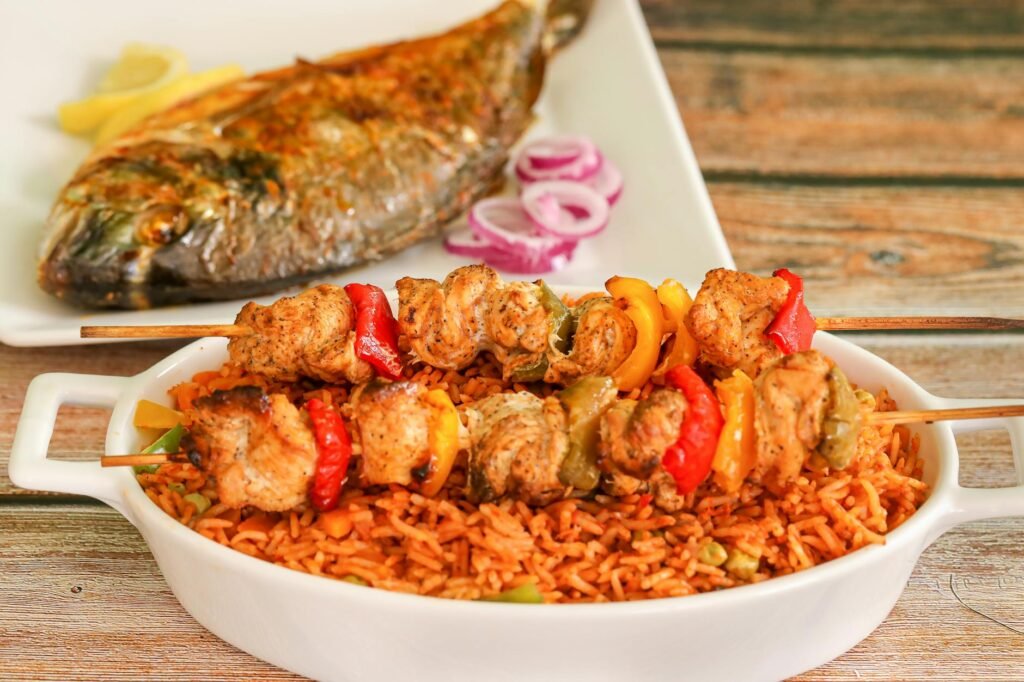
You cannot talk about Nigerian food without bowing to the king. Jollof Rice is arguably Nigeria’s most famous export. It is a one-pot marvel where rice is steamed in a rich, spicy tomato and pepper broth until it absorbs every ounce of flavor.
The History & Culture:
The name “Jollof” is derived from the Wolof people of the Senegambia region (modern-day Senegal and The Gambia), where the dish originated as Thieboudienne. However, as the recipe traveled down the West African coast, Nigeria adopted it, adapted it, and—if you ask any Nigerian—perfected it.
The “Smoky” Secret:
The Holy Grail of Nigerian Jollof is the “Party Jollof” flavor. This distinct, smoky taste (which we call culinary gold) comes from cooking the rice in massive cast-iron pots over firewood. The rice at the bottom burns slightly (the bun-bun), infusing the entire pot with a charred, smoky aroma that modern gas cookers struggle to replicate. Get the Party Jollof Rice Recipe Here:
2. Ofada Rice: The Unpolished Gem
The Taste of Heritage
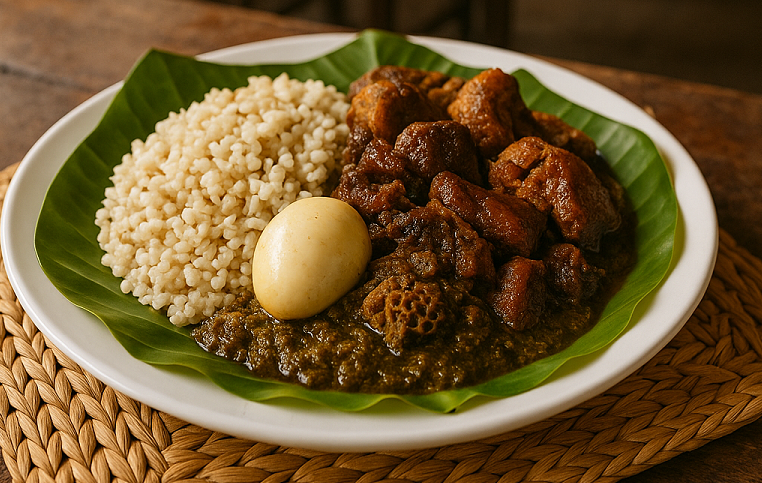
If Jollof is the polished city slicker, Ofada is the rugged, traditional soul of the South-West. Named after the town of Ofada in Ogun State, this is a unique variety of indigenous rice that is unpolished and fermented.
Why It’s Special:
Ofada rice is easily identified by its coarse texture, short grains, and distinctive fermented aroma. For years, it was considered a “village food,” but in recent decades, it has enjoyed a massive resurgence as a premium delicacy.
The Ritual of Eating It:
You don’t just eat Ofada; you experience it. It is traditionally served in uma leaves (Ewe Eran), which impart a subtle earthy flavor to the hot rice. It must be paired with Ayamase (Designer Stew)—a fiery sauce made from green peppers, bleached palm oil, and locust beans (Iru). It is a spicy, pungent reminder of our culinary roots. Get the Ofada Rice and Ayamese Stew Recipe here.
3. Tuwo Shinkafa: The Northern Transformation
Rice Reimagined
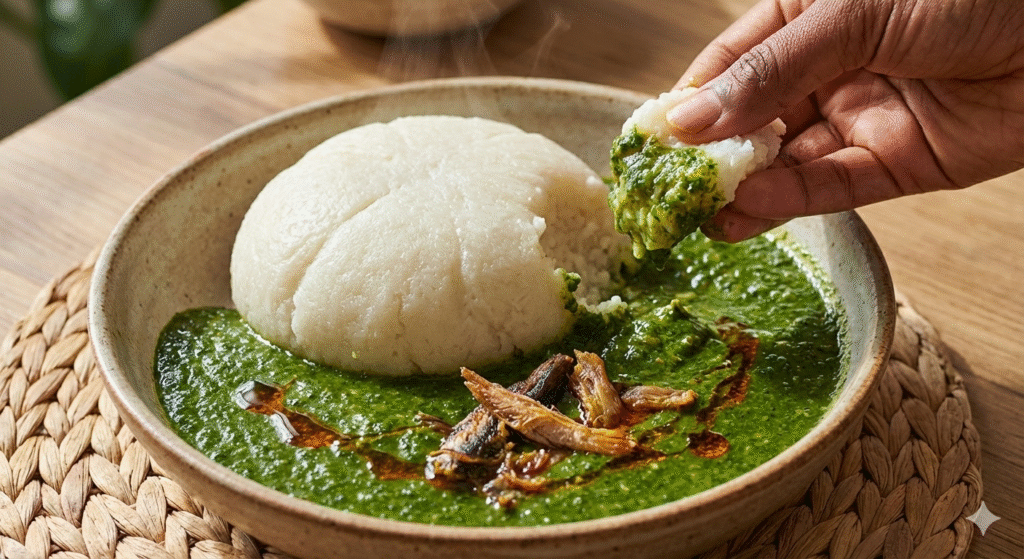
Travel up North to the Hausa and Fulani regions, and rice takes on a completely different form. Here, the grain is not meant to be counted; it is meant to be swallowed.
The Technique:
Tuwo Shinkafa is a “swallow” (fufu) made from soft, sticky rice varieties. The rice is cooked until it becomes a mash, then churned until it forms a soft, pillowy dough.
Cultural Context:
While the South treats rice as a standalone grain, the North integrates it into the “soup and swallow” culture. Tuwo Shinkafa is a canvas for the North’s incredible soups, like the emerald-green Miyan Kuka (dried baobab leaf soup) or the pumpkin-based Miyan Taushe. It serves as a reminder of how versatile this single ingredient can be across different climate zones. Get the Recipe for Tuwo Shinkafa Here.
4. Nigerian Fried Rice: The Loyal Sidekick
The “Jollof & Fried” Combo
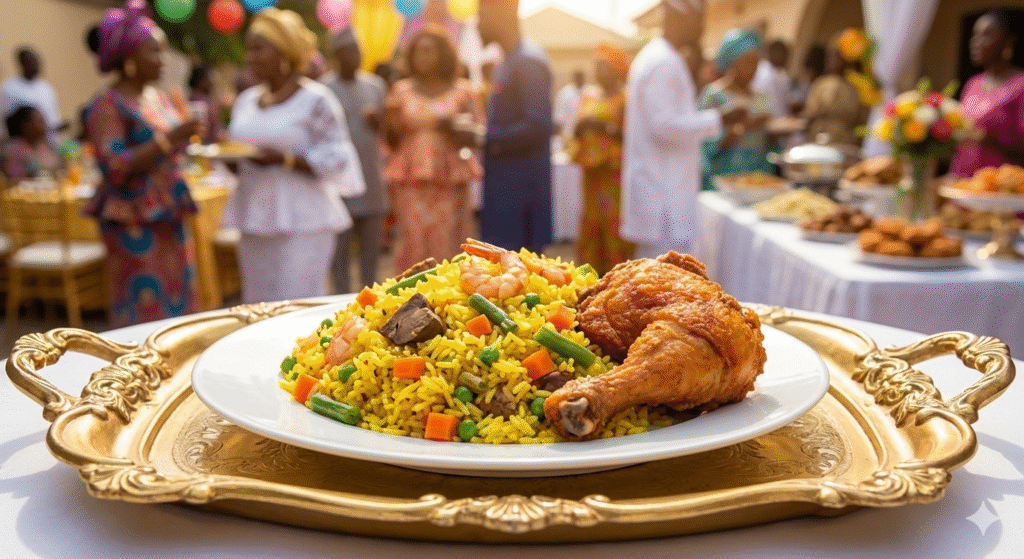
At a Nigerian party, you are often asked a critical question: “Jollof, Fried, or Both?”
Nigerian Fried Rice is the lighter, crunchier cousin to the heavy tomato-based Jollof.
The Twist:
Unlike Chinese fried rice which is stir-fried, Nigerian fried rice is deeply infused with curry powder (giving it that signature yellow tint) and dried thyme. It is a colonial-era adaptation that we made our own, packed with liver, prawns, and colorful veggies. It is rarely eaten alone—it almost always serves as the yin to Jollof’s yang on a party plate. Get the Fried Rice Recipe Here.
5. Coconut Rice: The Coastal Secret
The Tropical Delight
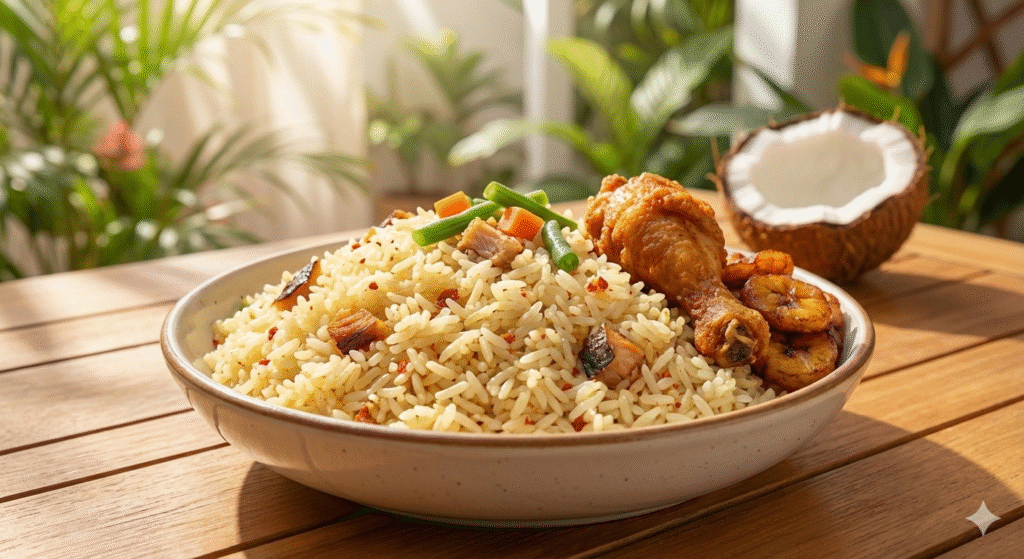
With our extensive coastline, it is no surprise that the coconut found its way into our rice pots. Particularly popular among the Efik and Ibibio people of the South-South, this dish uses fresh coconut milk as the boiling liquid for the rice.
The Flavor Profile:
Authentic Nigerian coconut rice is not a dessert. It is a savory, spicy main course. The sweetness of the coconut milk is balanced by the heat of yellow scotch bonnet peppers and the umami of crayfish. It is a dish that speaks of the tropical abundance of the Niger Delta. Get The Coconut Rice Recipe Here.
Ready to start cooking?
Click through to the recipe categories below to master these iconic dishes. Whether you want the smokiness of Jollof or the earthy punch of Ofada, we have broken down the science to help you get it right every time. Categories