
Intro
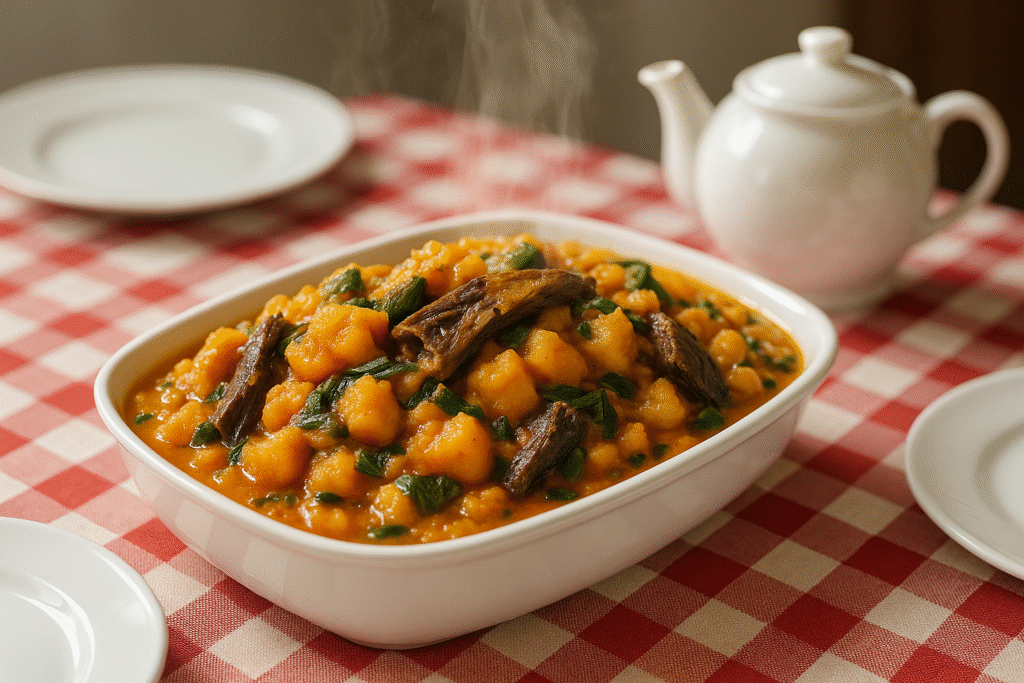
Yam Porridge, locally known in Nigeria as Asaro, is the ultimate one-pot comfort food. It consists of Puna yam chunks simmered in a rich, savory palm oil and pepper base until soft and creamy. It is popular on breakfast menus but can be served as a hearty lunch or dinner. The flavor profile is a complex balance of earthy sweetness from the yam, umami from the crayfish/stock, and the distinct, nutty aroma of red palm oil. I like to play around with different vegetable options for taste variety. You can too.
The Strategy for Success
The Goal (The Promise):
This guide ensures you achieve a rich, cohesive dish where the sauce is a vibrant orange emulsion that coats every cube of yam. We are aiming for “creamy,” not “watery soup with floating potatoes.”
The Common Pitfall (The Risk):
The most common failure in Asaro is texture dissonance: rock-hard yam chunks swimming in a thin, separated oil-and-water broth. Or, conversely, a dish that has been stirred so violently it turns into mashed potatoes rather than a textured porridge.
The Method (The Teacher):
We will use the “Partial Mash Technique.” By cooking the yam in the seasoned base and then deliberately crushing only 15-20% of the cooked yam chunks, we release natural starches. These starches gelatinize and bind the water and oil into a thick, luxurious gravy without destroying the structural integrity of the remaining chunks.
At a Glance
| Prep | Cook | Total | Servings | Skill Level |
| 20 Min | 30 Min | 50 Min | 4-6 | Beginner/Intermediate |
Why This Recipe Works
- Starch Gelatinization: By mashing a portion of the yam, we thicken the sauce naturally without needing flour or cornstarch. The released amylose molecules absorb water and swell, creating viscosity.
- Flavor Layering: We sauté the aromatics (onions, crayfish) in the palm oil before adding liquids. This blooms the spices and removes the “raw” edge from the palm oil, creating a deeper flavor foundation.
- Uniform Heat Distribution: Cutting the yams into uniform sizes ensures they cross the finish line at the same time preventing the “some mushy, some raw” disaster.
The Ingredients (Teacher’s Notes)
- 1 kg White Puna Yam (Peeled and cut into 1-inch cubes)
- 💡 (The Teacher’s ‘Why’): You want “Old Yam” (harvested months ago). It has a lower moisture content and higher starch density, which is essential for a fluffy texture and thick sauce.
- 🚫 (The Risk Manager’s ‘Why Not’): Do not use “New Yam” (freshly harvested). It is too watery, sweet, and will disintegrate into a gluey mess before the sauce develops flavor. Do not use Water Yam (Dioscorea alata) unless making Ikokore.
- 1/2 Cup Red Palm Oil
- 💡 (The Teacher’s ‘Why’): This provides the signature orange hue and earthy flavor. It acts as the lipid phase of our emulsion.
- 🚫 (The Risk Manager’s ‘Why Not’): Do not use vegetable oil or olive oil. The flavor profile will be completely wrong, and the color will be pale and unappetizing.
- 3 tbsp Ground Crayfish
- 💡 (The Teacher’s ‘Why’): This is the umami bomb (glutamates) of Nigerian cooking. It provides a savory depth that salt alone cannot achieve.
- 🚫 (The Risk Manager’s ‘Why Not’): Do not use whole crayfish without grinding them properly. Encountering a sharp shell in soft porridge ruins the eating experience.
- 2 Cups Habanero & Bell Pepper Blend (Roughly blended)
- 💡 (The Teacher’s ‘Why’): This provides heat (capsaicin) and sweetness.
- 🚫 (The Risk Manager’s ‘Why Not’): Do not blend to a smooth smoothie consistency. You want a little texture/flecking in the sauce for visual appeal.
- Smoked Fish or Dry Fish (Deboned and washed)
- 💡 (The Teacher’s ‘Why’): Adds a smoky complexity that permeates the yam cubes during the simmer.
- 🚫 (The Risk Manager’s ‘Why Not’): Do not skip the deboning process. Thoroughly soaking and cleaning the fish is mandatory to remove sand and grit.
- Leafy Greens (Ugu/Fluted Pumpkin Leaves or Spinach)
- 💡 (The Teacher’s ‘Why’): Adds a fresh vegetal contrast and iron.
- 🚫 (The Risk Manager’s ‘Why Not’): Do not add these until the heat is turned off. Residual heat is enough to cook them. Overcooking turns them brown and slimy.
Instructions (The ‘Why/Why Not’ Core)
Step 1: The Flavor Foundation
Heat the palm oil in a pot over medium heat for 2 minutes (do not bleach/smoke it). Add chopped onions and fry until translucent. Add the ground crayfish and fry for another 30 seconds.
- 💡 (The Teacher’s ‘Why’): We are “blooming” the aromatics. Fat carries flavor better than water. Frying the crayfish extracts the oil-soluble flavor compounds immediately.
- 🚫 (The Risk Manager’s ‘Why Not’): Do not let the onions burn. Burnt onion introduces a bitterness that no amount of seasoning can fix.
Step 2: Building the Liquid Base
Add the blended pepper mix and fry for 5 minutes to reduce sourness. Then, add water (or stock), smoked fish, seasoning cubes, and salt. Bring to a rolling boil.
- 💡 (The Teacher’s ‘Why’): We cook the pepper base first to evaporate excess water and concentrate the tomato/pepper sugars.
- 🚫 (The Risk Manager’s ‘Why Not’): Do not add the yam yet. If you add yam to cold water, the outside will soak up water and become soggy before the inside cooks. The liquid must be boiling.
Step 3: The Simmer
Gently lower the yam cubes into the boiling stock. The liquid should just cover the level of the yams. If the water is too high, ladle some out (you can add it back later). Cover and cook on medium heat for 15-20 minutes.
- 💡 (The Teacher’s ‘Why’): We are looking for a controlled simmer. High heat evaporates liquid too fast; low heat makes the yam gummy.
- 🚫 (The Risk Manager’s ‘Why Not’): STOP STIRRING. Once the yam goes in, do not stir with a spoon. The yam is fragile as it cooks. Agitating it now will break the cubes prematurely.
Step 4: The “Controlled Mash” (Critical Step)
Check for doneness by piercing a chunk with a fork—it should slide through easily. Take a wooden spoon or potato masher and mash about 15-20% of the yam chunks directly inside the pot.
- 💡 (The Teacher’s ‘Why’): This is the science of thickening. We are manually releasing starch into the liquid to create the “Asaro” consistency.
- 🚫 (The Risk Manager’s ‘Why Not’): Do not mash everything! If you over-mash, you are making Fufu, not porridge. You want defined cubes suspended in thick sauce.
Step 5: The Final Emulsion
Stir gently (folding motion) to mix the mashed yam paste with the liquid. The sauce should turn from red/clear to orange/opaque/creamy. Simmer for 2 more minutes. Turn off the heat and fold in the vegetables.
- 💡 (The Teacher’s ‘Why’): The residual heat wilts the vegetables perfectly, preserving their chlorophyll (green color) and nutrients.
- 🚫 (The Risk Manager’s ‘Why Not’): Do not walk away. At this stage, the sauce is thick and high in sugar (from the yam). It will burn the bottom of the pot within seconds if left unattended.
The ‘Risk-Free Q&A’ (Troubleshooting)
- Scenario 1: “Help! My porridge is too watery!”
- Analysis: You likely used new yam (low starch) or added too much water initially.
- Solution: Do not drain it (you lose flavor). Instead, mash more of the yam chunks than usual (up to 40%) and increase the heat to high for 2 minutes with the lid off to evaporate moisture.
- Scenario 2: “The yam is hard, but the water has dried up!”
- Analysis: The heat was too high, causing evaporation before thermal penetration of the yam.
- Solution: Add ½ cup of hot water (never cold, or you shock the starch). Cover the pot with foil and then the lid to create a steam trap. Turn heat to low.
- Scenario 3: “It tastes bitter.”
- Analysis: The palm oil was likely rancid, or the crayfish/onions burned in Step 1.
- Solution: Unfortunately, bitterness is hard to mask. You can try adding a tiny pinch of sugar or extra caramelized onions to balance it, but prevention is the only true cure.
Notes & Substitutions
- Protein: You can add beef or chicken, but they must be pre-cooked. Add them in Step 2.
- Vegan Option: Omit the crayfish and smoked fish. Use mushroom bouillon for umami and smoked paprika to mimic the smokiness of the fish.
- Sugar: Some people add a teaspoon of sugar to highlight the yam’s sweetness. This is controversial but traditional in some households.
Make-Ahead & Storage
- Fridge: Stores well for 3-4 days. The starch will retrogradate (harden) when cold.
- Reheating: You must add a splash of water when reheating, as the yam will have absorbed all available moisture in the fridge.
- Freezing: Not recommended. Yam changes texture when frozen and thawed, becoming spongy and grainy.
The “Best” Porridge Yam Recipe Card
Ingredients:
- 1 kg Puna Yam (cubed)
- 1/2 cup Red Palm Oil
- 1 medium Onion (chopped)
- 2 cups Pepper Blend (Tomatoes, Red Bell Pepper, Habanero/Scotch Bonnet)
- 3 tbsp Ground Crayfish
- 1 medium Smoked Fish (cleaned & deboned)
- 2 Seasoning Cubes (Maggi/Knorr)
- Salt to taste
- Handful of Ugwu or Spinach (sliced)
Instructions:
- Fry Base: Heat palm oil. Sauté onions and crayfish until fragrant. Add pepper blend and fry for 5 mins.
- Boil: Add water (approx. 2-3 cups), smoked fish, seasoning cubes, and salt. Bring to a rolling boil.
- Cook Yam: Add yam cubes. Water should just cover yams. Cover and cook on medium heat (15-20 mins) until soft. Do not stir.
- Thicken: Mash several yam chunks inside the pot with a wooden spoon.
- Finish: Stir gently to thicken sauce. Turn off heat. Fold in leafy greens immediately. Serve warm.