
Intro
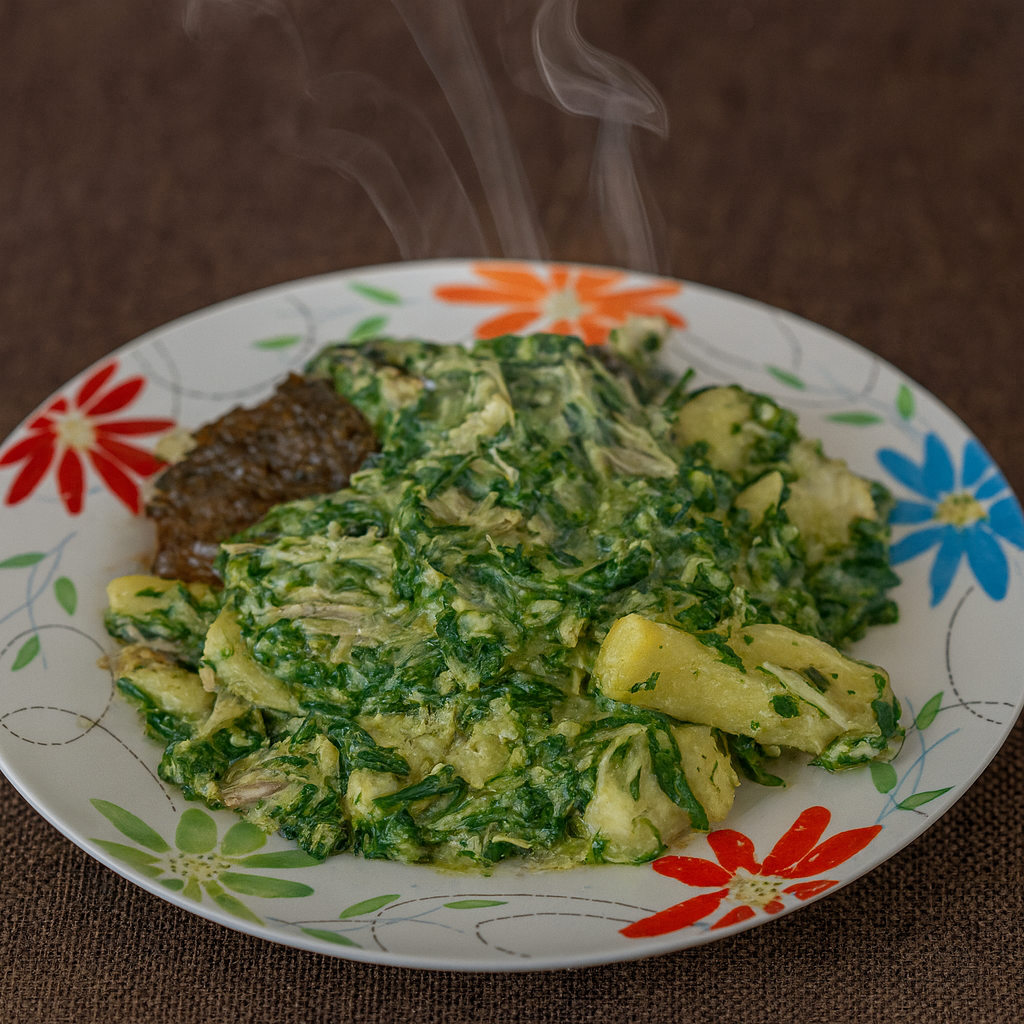
This is not your average porridge. This is a restorative “healing meal” designed for recovery, gut health, and clean eating. Unlike heavy, oil-laden pottages, this dish relies entirely on the natural fermentation of Oil Bean Seeds (Ukpaka) and the earthiness of Red Cocoyam. It is free from artificial seasoning cubes and excess fats, offering a clean, savory flavor profile that tastes like the farm, not the factory. This is my comfort food when I am unwell or convalescent.
The Strategy for Success
The Goal (The Promise):
This guide ensures you achieve a naturally creamy, savory porridge where the “soup” is thickened by the cocoyam itself, and the flavor is deep and complex without a single grain of MSG.
The Common Pitfall (The Risk):
The “Scratchy Throat” Syndrome. Cocoyam contains calcium oxalate crystals. If prepared or cooked incorrectly, it causes an intense, stinging itch in the throat. Additionally, without seasoning cubes, many cooks end up with a bland, watery dish because they fail to extract flavor from the natural ingredients.
The Method (The Teacher):
We will use the “Low-Heat Extraction” Technique. Instead of rushing the cooking, we simmer the snails and Ukpaka first to create a potent, natural stock. This replaces the need for Maggi. We also strictly time the introduction of the Waterleaf to prevent the porridge from turning into a watery soup.
At a Glance
| Prep | Cook | Total | Servings | Skill Level |
| 30 Min | 55 Min | 1 Hr 25 Min | 2-3 | Intermediate |
Why This Recipe Works
- Natural MSG: Fermented Oil Bean (Ukpaka) is rich in glutamates. By boiling it with the snails for 30 minutes, we release these natural flavor enhancers into the water, creating a rich base stock.
- Starch Gelatinization: By cooking the cocoyam directly in this small amount of stock, the starch released from the tuber acts as a binder, thickening the liquid into a creamy sauce without adding flour or thickeners.
- The “Oil-Less” Oil: We skip Palm Oil because Ukpaka is naturally oil-rich. As it simmers, it releases healthy fatty acids that gloss the porridge, providing richness without heaviness.
The Ingredients (Teacher’s Notes)
- 500g Red Cocoyam (Approx. 4 Large Tubers)
- 💡 (The Teacher’s ‘Why’): Red Cocoyam (Xanthosoma sagittifolium) holds its shape better than white cocoyam while still releasing enough starch to thicken the pot. It has a nuttier, earthier flavor.
- 🚫 (The Risk Manager’s ‘Why Not’): Do not use Ede Ofe (Soup thickener cocoyam) if you want chunks. It will dissolve completely into a paste. If Red is unavailable, White Cocoyam is the only acceptable substitute.
- 8 Large Snails
- 💡 (The Teacher’s ‘Why’): This is the protein powerhouse. Snails are low in fat and high in iron, perfect for a healing meal.
- 🚫 (The Risk Manager’s ‘Why Not’): Clean thoroughly! You must wash these with alum or lime until they squeak. Any residual slime will ruin the texture of the porridge and make the stock ropy.
- ½ Cup Ugbagha (Ukpaka/Ugba) – Sliced & Fermented
- 💡 (The Teacher’s ‘Why’): This is the heart of the dish. It provides the oil, the aroma, and the savory taste.
- 🚫 (The Risk Manager’s ‘Why Not’): Do not use unfermented or “dry” Ukpaka. It must be fresh and pungent. If it doesn’t have a strong smell, your porridge will be tasteless.
- 2 Large Bunches Waterleaf (Enough to fill a 1-Litre Cup chopped)
- 💡 (The Teacher’s ‘Why’): Waterleaf adds moisture and vitamins. It acts as a digestive aid.
- 🚫 (The Risk Manager’s ‘Why Not’): Do not wash the vegetable after chopping. Wash first, then chop. Excess water introduced at the end will dilute your thick porridge.
- 1 Tablespoon Ground Crayfish
- 💡 (The Teacher’s ‘Why’): A final hit of umami to round out the flavor.
- ½ Teaspoon Salt (Or to taste)
- 💡 (The Teacher’s ‘Why’): The only mineral seasoning needed.
- 1 Teaspoon Palm Oil (Optional)
- 🚫 (The Risk Manager’s ‘Why Not’): Strictly optional. For a true “healing” meal, rely on the Ukpaka’s natural oils.
Instructions (The ‘Why/Why Not’ Core)
Step 1: The Base Extraction
Place the thoroughly washed snails and the Ukpaka in a pot. Add exactly ½ cup of water. Cover and cook on Low Heat for 30 minutes.
- 💡 (The Teacher’s ‘Why’): We are “sweating” the ingredients. Low heat allows the tough snail fibers to soften slowly while forcing the Ukpaka to release its natural oils into that small amount of water.
- 🚫 (The Risk Manager’s ‘Why Not’): Do not use high heat. ½ cup of water will evaporate in 5 minutes on high heat, burning your Ukpaka. We want a concentrated stock, not burnt food.
Step 2: The Starch Integration
Peel and cut the Cocoyam into medium bite-sized chunks. Rinse quickly. Add the cocoyam to the pot with the snails. If the water has dried up completely, add just a splash (barely covering the bottom). Cook for 20 minutes on medium heat.
- 💡 (The Teacher’s ‘Why’): This timing ensures the cocoyam is cooked through (destroying the oxalate crystals) but not dissolved.
- 🚫 (The Risk Manager’s ‘Why Not’): Do not stir aggressively. If you stir too much now, the cocoyam will break down into a puree. We want distinct chunks in a thick sauce.
Step 3: The Nutrient Finish
Once the cocoyam is soft (test with a fork), add the chopped Waterleaf, Salt, and Crayfish. Leave the pot OPEN. Simmer for exactly 5 minutes. Stir gently to combine.
- 💡 (The Teacher’s ‘Why’): Waterleaf releases a lot of liquid. Cooking with the lid open allows that excess water to evaporate immediately, keeping the porridge thick.
- 🚫 (The Risk Manager’s ‘Why Not’): Do not cover the pot. Covering the pot now will trap steam, turn the Waterleaf brown/sour, and flood the porridge with water, making it soggy.
The ‘Risk-Free Q&A’ (Troubleshooting)
- Scenario 1: “Help! My throat itches after eating.”
- Analysis: The Calcium Oxalate crystals in the cocoyam were not fully destroyed.
- Solution: You likely cut the chunks too big or didn’t cook for the full 20 minutes. Next time, ensure the cocoyam is fork-tender before adding vegetables.
- Scenario 2: “It tastes bland.”
- Analysis: You relied on salt instead of the Ukpaka base, or used old Ukpaka.
- Solution: Since we don’t use Maggi, the quality of your ingredients is non-negotiable. Mash a tablespoon of the Ukpaka into the sauce to release more flavor.
- Scenario 3: “It’s too watery/soup-like.”
- Analysis: You added too much water in Step 1 or covered the pot in Step 3.
- Solution: Increase the heat to high for 2 minutes with the lid off to evaporate the excess moisture rapidly.
Notes & Substitutions
- Substitutions: If Red Cocoyam is scarce, White Cocoyam works but cooks faster—check it at 15 minutes.
- Protein: Dried fish can be added with the snails if you need more variety, but fresh Snail is preferred for the texture.
Make-Ahead & Storage
- Serve Fresh: This dish relies on the freshness of the waterleaf. It is best eaten immediately.
- Reheating: If reheating, do not use a microwave (it ruins the snail texture). Reheat on the stove with a splash of water.
The “Best” Tamara’s Healing Cocoyam Porridge Recipe Card
Ingredients:
- 500g Red Cocoyam (Peeled & cubed)
- 8 Large Snails (Washed with alum/lime)
- ½ cup Ukpaka (Sliced Oil Bean Seed)
- 2 bunches Waterleaf (Chopped)
- 1 tbsp Ground Crayfish
- ½ tsp Salt
- ½ cup Water (for stock)
Instructions:
- The Stock: Combine snails, Ukpaka, and ½ cup water in a pot. Simmer on Low Heat for 30 minutes until snails are tender-crunchy.
- The Porridge: Add cocoyam chunks. Cook on medium heat for 20 minutes until soft.
- The Finish: Add waterleaf, crayfish, and salt. Stir gently. Cook with LID OPEN for 5 minutes.
- Serve: Enjoy hot for maximum healing benefits.