
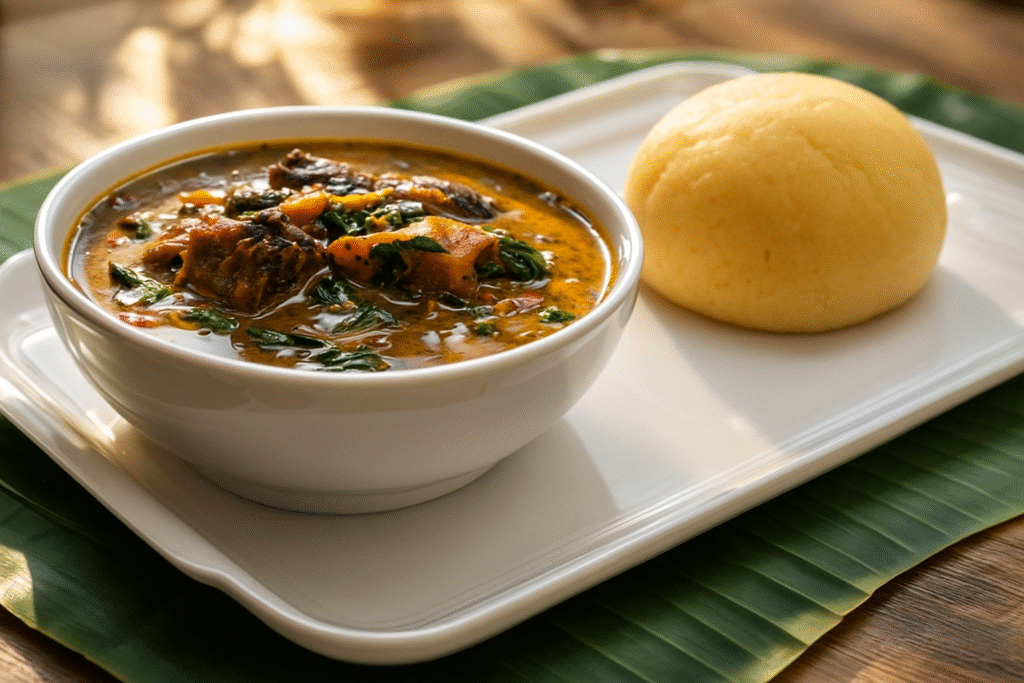
Ogbono Soup: The “Oil-Melt” Technique for Maximum Draw
What it is: A thick, mucilaginous (“draw”) soup made from the ground seeds of the African wild mango.
When to serve: Lunch or dinner, strictly with “Swallow” (Fufu, Eba, Pounded Yam, or Amala). It is too thick to eat with rice.
Flavor profile: Deeply earthy, nutty, and savory, with a unique slippery texture that aids in swallowing the fufu.
The Strategy for Success
The Goal (The Promise): This guide guarantees a soup with an incredible “draw” (elasticity) that stays consistent from the pot to the plate, without the dreaded “soapy” taste or burnt bitterness.
The Common Pitfall (The Risk): The most heartbreaking failure in Nigerian cooking is a pot of Ogbono that “cuts” (loses its elasticity and becomes watery) or tastes like soap. This usually happens due to three errors: bad seeds, burning the paste, or covering the pot.
The Method (The Teacher): I will teach you the “Oil-Melt” Technique. Instead of boiling the powder in water (which causes lumps) or frying it aggressively (which kills the elasticity), we will gently dissolve the ground seeds in warm palm oil. This activates the mucilage before it even touches the water, ensuring a smooth, lump-free, and super-stretchy soup.
At a Glance
| Prep | Cook | Total | Servings | Skill Level |
| 15 mins | 40 mins | 55 mins | 4-6 | Beginner |
Why This Recipe Works
- Fat Solubility: Ogbono powder is fat-soluble, not water-soluble. Dissolving it in oil first ensures every grain is coated, preventing clumps when the liquid is added.
- Temperature Control: High heat destroys the chemical bonds that create the “draw.” We use residual or low heat to melt the ogbono, preserving its structural integrity.
- The “Open Pot” Rule: Steam pressure breaks down the viscosity of the soup. By cooking uncovered, we allow evaporation to concentrate the flavor while maintaining the thick, stretchy texture.
The Ingredients (Teacher’s Notes)
- Ground Ogbono Seeds: 1/2 cup (approx. 70g)
- 💡 (The Teacher’s ‘Why’): These seeds contain high amounts of mucilage. When hydrated and heated, they swell to create the soup’s signature viscosity.
- 🚫 (The Risk Manager’s ‘Why Not’): Do not buy Ogbono that has been ground for weeks; it loses potency. Crucial: Smell it. If it smells like soap or mold, throw it away. It will ruin the entire pot. There is no fixing “soapy” Ogbono.
- Red Palm Oil: 1/2 cup (120ml)
- 💡 (The Teacher’s ‘Why’): This acts as the solvent for the seeds and provides the color and base flavor.
- 🚫 (The Risk Manager’s ‘Why Not’): Do not use vegetable oil. The flavor profile will be wrong, and the emulsion will not hold properly.
- Meat Stock (Beef/Goat/Chicken): 1.5 Liters (6 cups)
- 💡 (The Teacher’s ‘Why’): Ogbono itself is mild; the flavor comes heavily from a rich, seasoned stock.
- 🚫 (The Risk Manager’s ‘Why Not’): Do not just use water and bouillon cubes. The soup will lack depth.
- Assorted Meats/Fish: Cooked Beef, Shaki (Tripe), Dry Fish, Stockfish.
- Ground Crayfish: 3 tbsp
- Cameroon Pepper (Yellow Pepper): 1 tsp (for heat and aroma)
- Leafy Vegetables: Bitterleaf (washed) or Uziza leaves (preferred for aroma).
- 💡 (The Teacher’s ‘Why’): Uziza adds a peppery, aromatic note that cuts through the richness of the soup.
- 🚫 (The Risk Manager’s ‘Why Not’): If using Spinach/Ugu, add it at the very last second. If you cook it too long, it turns into mush and disappears in the thick soup.
Instructions (The “Why/Why Not” Core)
Step 1: The Stock Foundation
The Step: In a separate pot, ensure your meats and stockfish are boiled until tender. You need about 1.5 liters of rich, seasoned stock remaining in the pot. Set the meat aside, but keep the stock hot.
- 💡 (The Teacher’s ‘Why’): We separate the meat so we can control the texture of the soup base without obstructions.
- 🚫 (The Risk Manager’s ‘Why Not’): Do not start the soup if your meat is tough. The Ogbono cooks relatively fast; it won’t be on the fire long enough to tenderize tough beef.
Step 2: The Oil-Melt (The Critical Step)
The Step: Place a clean, dry pot on Low Heat. Add the palm oil. Let it melt for 30-45 seconds (just until warm, not smoking). Turn off the heat completely. Add the ground Ogbono and use a spoon to dissolve it into the warm oil until smooth.
- 💡 (The Teacher’s ‘Why’): We are creating a “roux.” The warm oil penetrates the seed particles, preparing them to expand. This guarantees zero lumps.
- 🚫 (The Risk Manager’s ‘Why Not’): DO NOT FRY THE OGBONO. If the oil is hot enough to sizzle or smoke, you have burned the mucilage. The soup will not draw, and it will taste bitter. The heat must be gentle.
Step 3: The Emulsification
The Step: Turn the heat back to Low. Slowly pour your hot meat stock into the Ogbono/Oil paste while stirring continuously. The mixture will thicken and start to become slimy/stretchy immediately.
- 💡 (The Teacher’s ‘Why’): Adding hot liquid to the warm paste shocks the starch and mucilage into immediate gelatinization.
- 🚫 (The Risk Manager’s ‘Why Not’): Do not use cold water! It will shock the fat and create hard lumps that are impossible to dissolve.
Step 4: The Simmer (The “No Lid” Zone)
The Step: Add your cooked meat, dry fish, and ground crayfish. Bring to a gentle simmer. DO NOT COVER THE POT. Cook for 15-20 minutes, stirring frequently to prevent burning at the bottom.
- 💡 (The Teacher’s ‘Why’): Ogbono needs time to cook out the “raw” earthy taste. The flavor deepens as it simmers.
- 🚫 (The Risk Manager’s ‘Why Not’): NEVER COVER AN OGBONO POT. Trapped steam creates water condensation that drips back into the soup and breaks the chemical bonds of the mucilage. If you cover it, the soup will lose its draw and become watery.
Step 5: The Finish
The Step: Taste for salt and seasoning cubes. Add the Cameroon pepper and your vegetable of choice (Uziza or Bitterleaf). Simmer for 2 more minutes. Turn off the heat.
- 💡 (The Teacher’s ‘Why’): We season last because the soup thickens as it cooks, concentrating the saltiness.
- 🚫 (The Risk Manager’s ‘Why Not’): Do not overcook the veggies. They provide a fresh contrast to the heavy soup.
The “Risk-Free Q&A” (Troubleshooting)
- “Help! My soup isn’t drawing (it’s watery)!”
- Analysis: You likely fried the ogbono too hot, used old seeds, or covered the pot.
- Solution: You can’t fully reverse it, but you can save the texture by blending 5-6 raw okra fingers and stirring them in. It adds fresh viscosity.
- “Help! The soup tastes bitter!”
- Analysis: You burned the ogbono in Step 2 or used bitterleaf that wasn’t washed enough.
- Solution: Unfortunately, burnt flavor is permanent. If it’s the bitterleaf, add a little more crayfish and a pinch of sugar to balance it, but proceed with caution.
- “Help! It’s too thick, like concrete!”
- Analysis: Your Ogbono seeds were very potent (this is a good problem!).
- Solution: Add hot water (not cold) in small splashes until you reach your desired consistency. Stir well after each splash.
Notes & Substitutions
- Okra-Ogbono Mix: For a lighter soup, use half the amount of Ogbono and add chopped okra 5 minutes before the end.
- Vegetarian: Use a robust mushroom stock and plenty of smoked mushrooms/tofu to replicate the meatiness.
- Uziza Substitute: If you can’t find Uziza leaves, use a pinch of ground black pepper and fresh spinach.
Make-Ahead & Storage
- Fridge: Stores for up to 5 days. It will solidify into a jelly-like block.
- Freezer: Freezes for up to 3 months.
- Reheating: This is critical. Reheat on Low Heat and Uncovered. If you microwave it or boil it rapidly with a lid, it will lose its viscosity upon reheating. You may need to add a splash of water to loosen it up.
The “Best” Ogbono Soup Recipe Card
Ingredients:
- 1/2 cup Ground Ogbono Seeds
- 1/2 cup Red Palm Oil
- 1.5 Liters Meat Stock (rich & seasoned)
- 500g Assorted Meats (Cooked) & Dry Fish
- 3 tbsp Ground Crayfish
- 1 tsp Cameroon Pepper
- 1 small bunch Uziza leaves or Bitterleaf
- Salt & Bouillon to taste
Instructions:
- Prep Paste: In a pot, melt palm oil on low heat. Turn off heat. Dissolve ogbono powder in oil until smooth.
- Combine: Turn heat to low. Pour hot stock into the paste while stirring. It will thicken.
- Simmer: Add cooked meats, fish, and crayfish. Simmer on low-medium heat for 20 mins. DO NOT COVER THE POT.
- Finish: Adjust seasoning. Add vegetables. Simmer 2 mins. Serve hot with Swallow.