
Intro
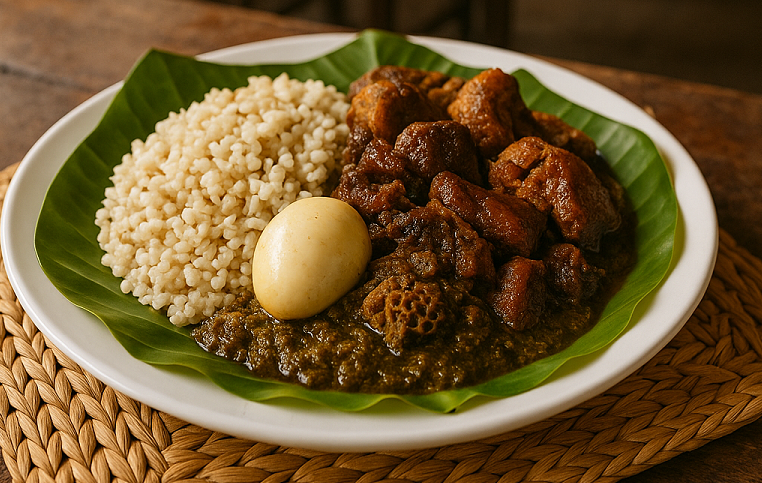
Ofada Rice served with Ayamase (often called “Designer Stew”) is the crown jewel of South-Western Nigerian cuisine. Unlike the tomato-heavy Red Stew, Ayamase is built on a foundation of green peppers, fermented locust beans (Iru), and the distinct, nutty aroma of bleached palm oil. It is savory, deeply umami-rich, and packs a heat that builds slowly. This is weekend food—meant to be savored, not rushed. It’s starch and sugar content is also lower than regular long grain rice, so if you are watching your sugar like me, this is a great staple.
“The Strategy for Success”
- The Goal (The Promise): We are aiming for a stew where the oil floats triumphantly on top, completely separated from the pepper base, with a flavor that is nutty rather than raw. The rice should be distinct and firm, with its signature aroma intact but without the “muddy” taste of improper washing.
- The Common Pitfall (The Risk): The biggest failure in Ayamase is bitterness. This happens when the palm oil is burnt rather than bleached, or when the onions are scorched. For the rice, the common failure is “The Stone Age”—serving rice that hasn’t been properly destoned or washed, resulting in a gritty, sandy meal.
- The Method (The Teacher): We will use the “Closed-Pot Bleaching” technique. This chemically alters the palm oil from red and heavy to translucent and nutty without setting off your smoke alarm or burning the house down. For the stew, we rely on moisture reduction before frying to ensure intense flavor concentration.
“At a Glance”
| Prep | Cook | Total | Servings | Skill Level |
| 45 Mins | 1 Hr 15 Mins | 2 Hrs | 6-8 | Advanced |
“Why This Recipe Works”
- Chemical Alteration (Bleaching): Heating palm oil past its smoke point (under a lid) breaks down the carotenoids (red color), changing the flavor profile from “earthy/raw” to “nutty/toasted,” which is the signature taste of Ayamase.
- Pre-Reduction of Peppers: By boiling or roasting the blended peppers before adding them to the oil, we remove 80% of the water. This allows the peppers to fry immediately rather than boil in the oil, preventing a “soggy” stew.
- The Umami Bomb: The combination of Iru (locust beans) and ground crayfish provides natural MSG (glutamates), creating a depth of flavor that bouillon cubes alone cannot achieve.
“The Ingredients (Teacher’s Notes)”
The Stew Base:
- Palm Oil: 2 Cups (500ml).
- 💡 (The Teacher’s ‘Why’): This is the cooking medium. We need enough oil to “deep fry” the pepper base initially.
- 🚫 (The Risk Manager’s ‘Why Not’): Do not use vegetable oil mixed with red coloring. It will not bleach correctly and will taste synthetic. Use 100% pure red palm oil.
- Green Bell Peppers (Tatashe): 8-10 large ones, seeds removed.
- Scotch Bonnet Peppers (Rodo): 4-6 green ones (adjust for heat).
- 💡 (The Teacher’s ‘Why’): We use green peppers to maintain the dark, earthy color of the stew.
- 🚫 (The Risk Manager’s ‘Why Not’): Do not use red peppers unless you want a hybrid stew. It changes the flavor profile to be sweeter, which clashes with the bleached oil.
- Locust Beans (Iru Woro): 3 Tablespoons, rinsed.
- 💡 (The Teacher’s ‘Why’): This is the soul of the dish. It provides the fermented funk that cuts through the rich oil.
- 🚫 (The Risk Manager’s ‘Why Not’): Do not use the mashed/smooth type (Iru Pete) if you can avoid it; it dissolves too quickly. You want the whole beans for texture.
The Proteins:
- Assorted Meats: 1kg (Beef, Shaki/Tripe, Ponmo/Cow Skin), boiled and diced small.
- Boiled Eggs: 4-6, peeled.
The Rice:
- Ofada Rice: 3 Cups (Unpolished short-grain rice).
- 💡 (The Teacher’s ‘Why’): This rice contains more fiber and flavor than polished white rice. The bran layer provides a unique aroma.
- 🚫 (The Risk Manager’s ‘Why Not’): Do not substitute Basmati or Jasmine. The texture will be wrong, and it won’t hold the heavy sauce well.
“Instructions (The ‘Why/Why Not’ Core)”
Phase 1: The Pepper Prep
The Step: Blend the green bell peppers, scotch bonnets, and 2 onions roughly (not smooth). Pour into a pot and boil until the water dries up completely.
- 💡 (The Teacher’s ‘Why’): We are concentrating the sugars and removing moisture. If you pour wet pepper puree into hot oil, it will splatter dangerously and take forever to fry.
- 🚫 (The Risk Manager’s ‘Why Not’): Do not skip this. If you fry raw, watery pepper puree, you will end up with a “stewed” texture instead of the fried texture required for authentic Ayamase.
Phase 2: The Bleaching (DANGER ZONE)
The Step: Pour the palm oil into a clean, dry pot. Cover the pot securely. Turn heat to low-medium and leave for 10-12 minutes. Turn off the heat and DO NOT OPEN THE POT. Let it cool completely (at least 20 mins) before opening.
- 💡 (The Teacher’s ‘Why’): We heat the oil to break down the red pigments. We keep the lid on to trap the smoke and prevent oxygen from fueling a fire.
- 🚫 (The Risk Manager’s ‘Why Not’): Never open the pot while the oil is screaming hot. The influx of oxygen can cause the oil to burst into flames (flashover). Furthermore, the smoke will choke your entire household. Patience is safety here.
Phase 3: The Flavor Base
The Step: Once the oil is warm (not smoking), turn the heat back on. Add chopped onions and the Iru (locust beans). Fry until the onions are browned and the Iru smells pungent.
- 💡 (The Teacher’s ‘Why’): This is “blooming” the spices. The oil absorbs the flavor of the onion and fermented beans, creating a flavored base oil.
- 🚫 (The Risk Manager’s ‘Why Not’): Do not throw the peppers in first. If you don’t fry the onions/Iru first, the oil will lack depth.
Phase 4: The Frying
The Step: Add the boiled/dried pepper mix. Fry for 15-20 minutes, stirring intermittently. Then add the ground crayfish, bouillon, and salt. Finally, add the cooked meats and boiled eggs. Simmer on low for another 10 minutes.
- 💡 (The Teacher’s ‘Why’): You know it is ready when the oil bubbles float to the top and the sauce darkens from bright green to a deep olive/brown. This is called “oil separation.”
- 🚫 (The Risk Manager’s ‘Why Not’): Do not overcrowd the pot with too much meat liquid (stock). Ayamase is an oil-based stew, not a water-based curry. Use stock sparingly.
Phase 5: The Rice (The Wash & Boil)
The Step: Pick the rice to remove stones. Wash the rice repeatedly (4-5 times) until the water runs clear. Parboil for 5 minutes, rinse again, then cook with fresh water and salt until soft.
- 💡 (The Teacher’s ‘Why’): Ofada is unpolished and often processed traditionally, meaning it has high starch and debris. The parboiling removes the “dirty” smell and prevents it from becoming a sticky block.
- 🚫 (The Risk Manager’s ‘Why Not’): Do not cook it straight from the bag like American long-grain rice. It will smell too pungent and likely contain sand that cracks a tooth.
“The ‘Risk-Free Q&A’ (Troubleshooting)”
- Analysis 1: “My stew tastes bitter!”
- The Diagnosis: You burnt the bleaching oil (it turned black instead of honey-brown) or you burnt the onions.
- The Solution: Unfortunately, burnt oil cannot be fixed. You must start over. If it is only slightly bitter, adding a little more caramelized onion can sometimes mask it, but it’s risky.
- Analysis 2: “The stew is too watery and the oil won’t float.”
- The Diagnosis: The peppers contained too much water or you didn’t fry long enough.
- The Solution: Turn the heat down to the lowest setting and let it simmer uncovered for 15-20 minutes. Evaporation is your friend.
- Analysis 3: “My Ofada rice smells… foul.”
- The Diagnosis: Insufficient washing or skipping the parboil step.
- The Solution: Rinse the cooked rice in hot water immediately. It won’t fix it 100%, but it will reduce the pungency. Next time, wash until the water is crystal clear.
Notes & Substitutions
- Oil Substitute: There is no substitute for bleached palm oil in this specific recipe. Vegetable oil will make a delicious stew, but it will not be Ayamase.
- Vegetarian: You can use mushrooms and tofu, but you must rely heavily on the Iru and Crayfish for flavor depth (unless strict vegan, then omit crayfish and use mushroom powder).
Make-Ahead & Storage
- Freezing: Ayamase freezes beautifully. In fact, the flavors meld better after sitting for 24 hours.
- Reheating: The oil will solidify into a hard orange block in the fridge. This is normal science (saturated fats). Reheat slowly to melt the oil back into liquid form.
The “Best” Ofada & Ayamase Recipe Card
Ingredients:
- 2 cups Palm Oil
- 10 Green Bell Peppers & 4 Green Scotch Bonnets (Coarsely blended & boiled down)
- 2 Onions (Chopped)
- 3 tbsp Iru (Locust Beans)
- 3 tbsp Ground Crayfish
- 1kg Assorted Meats (Tripe, Beef, Cow Skin) – Pre-cooked
- 4 Boiled Eggs
- 3 cups Ofada Rice
- Salt & Bouillon to taste
Instructions:
- Bleach: Heat palm oil in a covered pot on medium for 10-12 mins. Turn off heat. Do not open until cool.
- Base: Heat bleached oil. Fry chopped onions and Iru until fragrant.
- Fry: Add the boiled-down pepper paste. Fry for 15 mins until oil separates.
- Combine: Add crayfish, seasoning, meats, and eggs. Simmer on low heat for 10 mins.
- Rice: Pick stones from rice. Wash thoroughly. Parboil for 5 mins, rinse, then cook in salted water until tender.
- Serve: Serve rice in a leaf (optional) with a generous ladle of stew.