
Intro
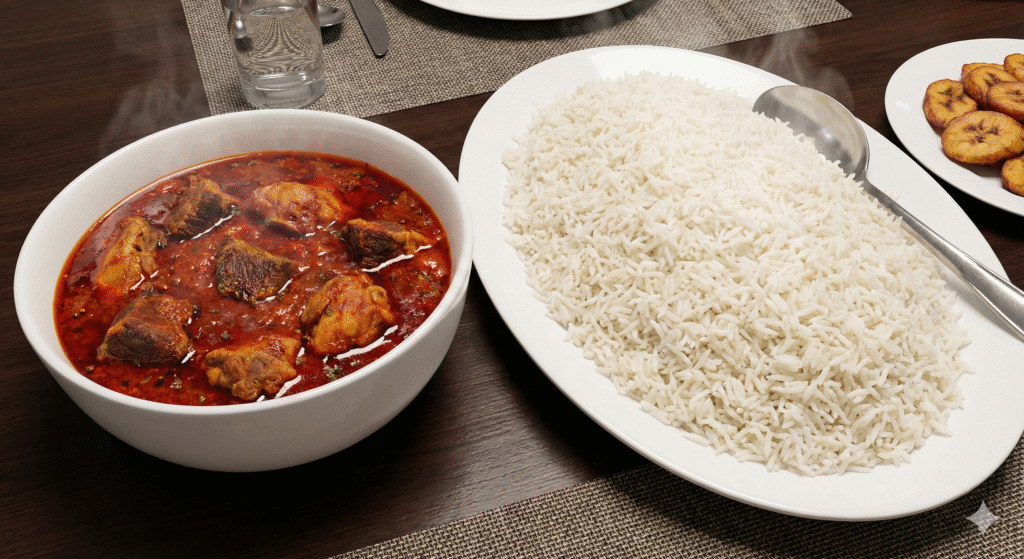
Nigerian Red Tomato Stew (Obe Ata Dindin) is the “Mother Sauce” of Nigerian cuisine. It is not just a stew; it is the foundational condiment eaten with White Rice, Yam, Bread, Plantain, and even some Swallows. Unlike a Western marinara, this stew is fried, not simmered, resulting in a deep, dark red color and an intense savory flavor profile that relies on the caramelization of tomato and pepper sugars.
The Strategy for Success
The Goal (The Promise):
This guide ensures you create a stew that is deep red, rich, and completely free of that sharp, metallic “sour tomato” taste. The final result will have a layer of red oil floating clearly on top—the visual certification of a properly cooked Nigerian stew.
The Common Pitfall (The Risk):
The “Sour Soup” Syndrome. Beginners often rush the cooking process, resulting in a watery, pale orange sauce that tastes acidic and spoils quickly because the water content was not sufficiently evaporated.
The Method (The Teacher):
We will use the “Reduction-Then-Fry” Technique. Instead of frying raw, watery blender puree directly in oil (which boils the oil and creates a mess), we will boil the pepper mix down to a thick paste first. Only then do we introduce it to the hot oil to fry. This guarantees the removal of acidity and the development of the Maillard reaction (browning/flavor).
At a Glance
| Prep | Cook | Total | Servings | Skill Level |
| 30 Min | 60 Min | 1 Hr 30 Min | 8-10 | Intermediate |
Why This Recipe Works
- Acid Neutralization: By boiling the pepper blend independently first, we evaporate the volatile acids found in raw tomatoes, leaving behind only the natural sugars and solids.
- Oil Extraction: The generous use of oil extracts the lycopene (red pigment) and capsicum (heat) from the peppers, turning the oil itself into a flavorful ingredient rather than just a cooking medium.
- Flavor Locking: We fry the cooked proteins (meat/chicken) again inside the stew at the very end. This allows the meat to absorb the stew, while the stew absorbs the savory meat juices.
The Ingredients (Teacher’s Notes)
- 1.5 kg Plum/Roma Tomatoes (Very Ripe)
- 💡 (The Teacher’s ‘Why’): Plum tomatoes have less water and more flesh than salad tomatoes. We want solids, not juice.
- 🚫 (The Risk Manager’s ‘Why Not’): Do not use unripe (hard/orange) tomatoes. They are bitter and will require excessive sugar or Maggi to mask the taste.
- 5 Large Tatashe (Red Bell Peppers)
- 💡 (The Teacher’s ‘Why’): This provides the vibrant red color and the body of the stew. It adds sweetness to balance the tomato acidity.
- 🚫 (The Risk Manager’s ‘Why Not’): Seed them! You must remove the seeds from Tatashe. They impart a bitter taste that ruins the sweetness.
- 3-5 Scotch Bonnet Peppers (Ata Rodo)
- 💡 (The Teacher’s ‘Why’): The heat source. Adjust quantity based on tolerance.
- 🚫 (The Risk Manager’s ‘Why Not’): Do not touch your eyes after handling these. Wash hands thoroughly or use gloves.
- 3 Large Onions (2 for blending, 1 for slicing)
- 💡 (The Teacher’s ‘Why’): Onions are the primary sweetener. Blending them creates a savory base; slicing and frying them infuses the oil.
- 🚫 (The Risk Manager’s ‘Why Not’): Do not skimp on onions. If you reduce the onions, the stew will lack depth.
- 2 Cups Vegetable Oil (or Groundnut Oil)
- 💡 (The Teacher’s ‘Why’): It seems like a lot, but this is a preservative stew. The oil acts as a barrier against air, keeping the stew fresh for weeks.
- 🚫 (The Risk Manager’s ‘Why Not’): Do not use Olive Oil. It has a low smoke point and a strong flavor that clashes with Nigerian spices.
- 2 Cups Concentrated Meat Stock
- 💡 (The Teacher’s ‘Why’): This is where the “umami” comes from.
- 🚫 (The Risk Manager’s ‘Why Not’): Do not use water. If you add plain water to your fried stew, you dilute all the work you just did.
Instructions (The ‘Why/Why Not’ Core)
Step 1: The Blend & The Boil (The Reduction)
Wash tomatoes, tatashe (deseeded), rodo (pepper), and 2 onions. Blend until smooth. Pour into a large pot and cook on High heat with a little oil until almost all the water evaporates and you are left with a thick, red paste.
- 💡 (The Teacher’s ‘Why’): We are mechanically separating water from solids. This reduces frying time from 2 hours to 20 minutes and prevents oil splatter.
- 🚫 (The Risk Manager’s ‘Why Not’): Do not burn it! As the water dries up, it will splatter (volcanic bubbles). Lower the heat towards the end or it will char the bottom. You will know when it is ready when the oil floats on top
Step 2: The Oil Infusion
In a clean, dry pot, heat the vegetable oil. Add the remaining sliced onion. Sweat the onions (fry with a little salt in a covered pan until the onions are translucent without browning).
- 💡 (The Teacher’s ‘Why’): We are flavoring the oil. This onion-infused oil is the secret to the aroma of “Party Stew.”
- 🚫 (The Risk Manager’s ‘Why Not’): Do not burn the onions. Burnt onion tastes like charcoal.
Step 3: The Paste Fry
Carefully scoop the boiled tomato paste (from Step 1) into the hot oil. Add tin tomato paste (optional) if you want extra redness. Fry on medium heat for 15-20 minutes, stirring constantly.
- 💡 (The Teacher’s ‘Why’): This is the “Dindin” (frying) part. We are cooking the tomato solids in fat to develop a sweet, roasted flavor.
- 🚫 (The Risk Manager’s ‘Why Not’): Do not walk away. The paste is thick and heavy; it will sink and burn within seconds if not stirred.
Step 4: The Integration
Once the oil creates distinct bubbles on top of the paste, add your Curry Powder, Thyme, Seasoning Cubes, and Meat Stock. Stir well. Add your pre-cooked proteins (Fried Beef, Chicken, or Fish).
- 💡 (The Teacher’s ‘Why’): We add the stock now to loosen the stew to the desired consistency.
- 🚫 (The Risk Manager’s ‘Why Not’): Do not dump the meat in if the stew is still watery. The base must be fried first.
Step 5: The Simmer (Oil Separation)
Lower the heat to the lowest setting. Cover the pot and let it simmer for 10-15 minutes.
- 💡 (The Teacher’s ‘Why’): This gentle heat breaks the emulsion slightly, allowing the oil to rise to the surface.
- 🚫 (The Risk Manager’s ‘Why Not’): If you boil on high heat here, the oil will never settle, and the stew will look cloudy.
The ‘Risk-Free Q&A’ (Troubleshooting)
- Scenario 1: “It tastes sour/tangy.”
- Analysis: The tomatoes weren’t ripe enough, or you didn’t boil off the water in Step 1.
- Solution: The Baking Soda Hack. Add a tiny pinch (1/4 tsp) of baking soda to the stew. It neutralizes the acid instantly. Alternatively, add a teaspoon of sugar.
- Scenario 2: “The stew is dark/black.”
- Analysis: You burnt the onions in Step 2 or fried the paste on too high heat.
- Solution: Unfortunately, you cannot remove a burnt taste. You can try to dilute it by adding more fresh tomato paste fried separately, but prevention is key.
- Scenario 3: “The oil isn’t floating to the top.”
- Analysis: There is still too much water in the stew.
- Solution: Leave the pot open (lid off) and simmer on low-medium heat for another 10-15 minutes to encourage evaporation.
Notes & Substitutions
- Tin Tomato Paste: Many cooks add a small can of tomato paste during Step 3. This acts as a thickener and color enhancer. It gives that deep ruby red color characteristic of “Party Stew.”
- Protein: If using fish (especially fragile fish like Mackerel), be careful when stirring. Ideally, fry the fish separately and add it only in the last 5 minutes.
- Vegetarian: Use mushroom stock and fried tofu or mushrooms instead of meat.
Make-Ahead & Storage
- Fridge: Keeps for up to 1 week. The oil layer on top acts as a preservative.
- Freezer: This is the ultimate meal prep item. It freezes perfectly for up to 3 months.
- Reheating: Reheat on the stove. If it looks congealed, add a splash of water to loosen it up as it warms.
The “Best” Red Tomato Stew Recipe Card
Ingredients:
- 1.5kg Ripe Tomatoes
- 5 Large Tatashe (Red Bell Peppers)
- 4 Scotch Bonnet Peppers (Rodo)
- 3 Onions (2 blended, 1 sliced)
- 2 cups Vegetable Oil
- 2 cups Meat Stock
- Pre-cooked Meat/Chicken/Fish
- Seasoning: Curry, Thyme, Maggi, Salt
Instructions:
- Reduction: Blend tomatoes, peppers, and 2 onions. Boil in a pot until water dries up and paste thickens.
- Infuse: Heat oil. Sweat the Onions (fry sliced onions with a pinch of salt in a covered pan until translucent).
- Fry: Add the boiled tomato paste. Fry for 15-20 mins until oil separates and bubbles.
- Simmer: Add stock, spices, and meat. Stir. Cover and simmer on low heat for 10 mins until oil floats on top.
- Serve: Serve with Rice, Yam, or Plantain.