
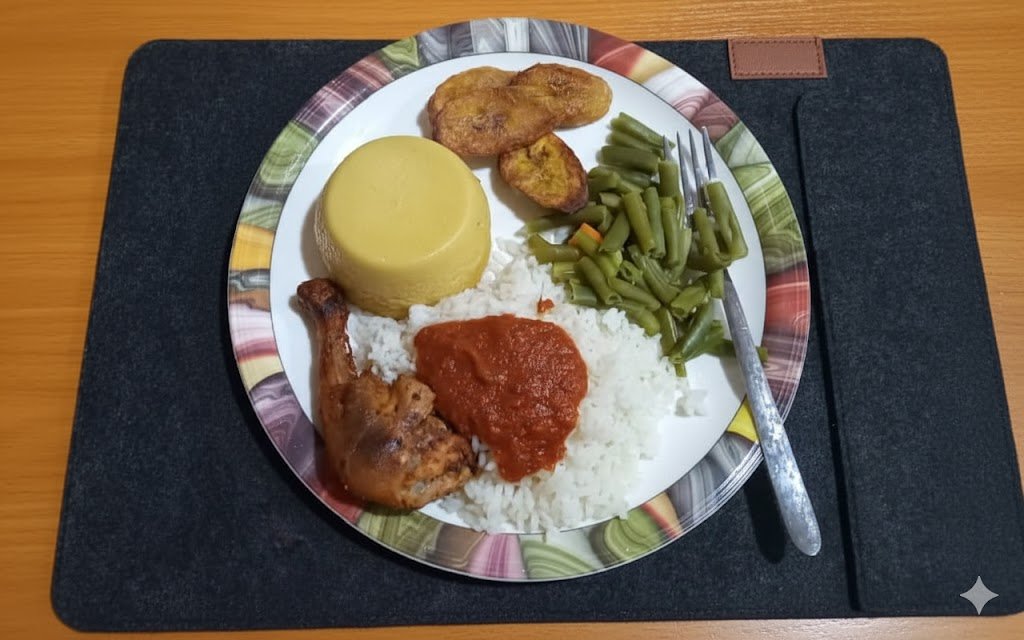
Moi Moi: The “Perfect Emulsion” Method
Intro
Moi Moi (or Moin Moin) is a savory Nigerian steamed bean pudding made from a mixture of washed and peeled black-eyed peas, onions, and fresh ground peppers. It is a staple of Nigerian cuisine, often served at parties, weddings, or as a protein-rich breakfast alongside pap (akamu) or garri. The flavor profile is earthy, spicy, and deeply savory, with a texture that should be delicate—somewhere between a firm custard and a soufflé. Just like Akara, Moi Moi and Akamu is one of my preferred weekend breakfast menu items.
“The Strategy for Success”
The Goal (The Promise):
This guide ensures you achieve the “Holy Trinity” of Moi Moi textures: Smoothness (no grit), Fluffiness (aerated, not dense), and Moisture (melt-in-the-mouth, not chalky).
The Common Pitfall (The Risk):
We’ve all seen Moi Moi that is rock-hard and dry, or conversely, a watery mess that refuses to set. The failure point is almost always Hydration Control. Beginners add too much water during the blending stage to help the blender blade spin, ruining the emulsion before the cooking even begins.
The Method (The Teacher):
We will use the Viscosity Control Technique. Instead of adding water arbitrarily, we will blend with minimal liquid to create a thick paste, then “slack out” the batter with flavorful stock and oil only after blending. We will also incorporate air manually to ensure a light internal crumb.
“At a Glance”
| Prep | Cook | Total | Servings | Skill Level |
| 45 Mins (active) | 60 Mins | 1 Hr 45 Mins | 6-8 Wraps | Intermediate |
“Why This Recipe Works”
-
Controlled Emulsification: By adding the oil after the paste is smooth, we coat the starch granules, preventing the pudding from becoming rubbery and ensuring a soft mouthfeel.
-
Aeration by Agitation: We utilize a mixing technique similar to cake batter—incorporating air bubbles that expand during steaming—to prevent the “brick” texture common in amateur Moi Moi.
-
The “Steam Bath” Principle: We use low, consistent steam rather than boiling water contact, ensuring the proteins coagulate gently without curdling or becoming tough.
“The Ingredients (Teacher’s Notes)”
-
3 Cups Honey Beans (Ewa Oloyin) or Black-eyed Peas
-
💡 (The Teacher’s ‘Why’): Honey beans are naturally sweeter and have a unique starch structure that gels perfectly.
-
🚫 (The Risk Manager’s ‘Why Not’): Do not use canned beans. They are already cooked/hydrated and will result in a soup, not a pudding. Do not leave skins on; the tannins make the dish bitter and gray.
-
-
2 Large Red Bell Peppers (Tatashe) & 2-3 Scotch Bonnets (Rodo)
-
💡 (The Teacher’s ‘Why’): Tatashe provides the signature orange-red color and sweetness; Scotch bonnets provide the heat.
-
🚫 (The Risk Manager’s ‘Why Not’): Deseed the Tatashe thoroughly. The seeds are bitter. Do not use dry chili powder as a substitute; you need the fresh vegetable body for texture.
-
-
1 Cup Vegetable Oil (or 50/50 mix with Palm Oil)
-
💡 (The Teacher’s ‘Why’): Fat interferes with protein bonding, keeping the texture tender (shortening effect). Palm oil adds traditional flavor and color.
-
🚫 (The Risk Manager’s ‘Why Not’): Do not reduce the oil significantly. Low-fat Moi Moi is dry, hard, and chalky.
-
-
1.5 Cups Rich Beef or Chicken Stock (Cool)
-
💡 (The Teacher’s ‘Why’): This is your primary seasoning vehicle. It permeates the bean paste better than water.
-
🚫 (The Risk Manager’s ‘Why Not’): Do not use hot stock; you will “cook” the beans prematurely in the bowl.
-
-
Inclusions (Optional): Boiled Eggs, Corned Beef, Flaked Smoked Fish.
“Instructions (The ‘Why/Why Not’ Core)”
Phase 1: The Prep
Step 1: Soaking and Peeling (De-skinning)
Soak beans for 10 minutes. Use a pulse blender method or rub between palms to detach skins. Rinse repeatedly until beans are white and water is clear. Soaking for 3-4 hours afterward to soften is ideal.
-
💡 (The Teacher’s ‘Why’): Removing the skin removes the “earthy dirt” flavor and allows for a creamy paste.
-
🚫 (The Risk Manager’s ‘Why Not’): Do not soak overnight in a warm kitchen. The beans will ferment (sour) and bubble, ruining the flavor profile.
Phase 2: The Blend
Step 2: High-Viscosity Blending
Blend the beans with the onions, peppers, and just enough water to get the blades moving (approx 1/2 cup to start). Blend until completely silky smooth.
-
💡 (The Teacher’s ‘Why’): We need a fine particle size for a smooth mouthfeel. Grit in the final dish is a sign of poor preparation.
-
🚫 (The Risk Manager’s ‘Why Not’): CRITICAL STOP POINT. Do not drown the beans in water here. If the batter is thin like milk now, it is ruined. It must be the consistency of thick oatmeal or Greek yogurt.
Phase 3: The Mix
Step 3: Seasoning and Aeration
Pour the thick paste into a bowl. Add your oil first and mix. Then, gradually add the stock while stirring. Dissolve bouillon cubes and salt in a tablespoon of hot water and add. Whisk vigorously for 2-3 minutes.
-
💡 (The Teacher’s ‘Why’): Whisking incorporates air. The oil coats the particles first, sealing in moisture.
-
🚫 (The Risk Manager’s ‘Why Not’): Do not skip the vigorous mixing. If you just stir it lazily, the Moi Moi will be dense. Taste the raw batter (spit it out if you prefer)—it must be slightly over-seasoned, as steaming dulls the saltiness.
Phase 4: The Assembly
Step 4: Wrapping and Inclusions
Prepare your container (Thaumatococcus leaves/Moi Moi leaves are best for flavor; foil pans or heat-safe pouches work). Scoop batter in, add your protein (egg/fish), and seal tightly.
-
💡 (The Teacher’s ‘Why’): Leaves impart a distinct, smoky aroma called eewe that defines authentic Moi Moi.
-
🚫 (The Risk Manager’s ‘Why Not’): Do not overfill the containers. The batter expands as it cooks. If overfilled, it will burst the seal, leak out, and absorb water.
Phase 5: The Steam
Step 5: The Steam Bath
Line the base of a pot with stalks, foil balls, or a rack. Add water (do not submerge the wraps). Cover the pot tightly (use a plastic bag under the lid to trap steam). Cook on medium-low heat for 45-60 mins.
-
💡 (The Teacher’s ‘Why’): We are cooking with vapor, not boiling water. The gentle heat sets the structure uniformly.
-
🚫 (The Risk Manager’s ‘Why Not’): Do not let the pot run dry. You will smell burning. Check water levels every 15 minutes. Conversely, do not let boiling water touch the seal of your wraps—water will seep in and turn the pudding to mush.
“The ‘Risk-Free Q&A’ (Troubleshooting)”
Scenario 1: “Help! My Moi Moi is too soft and mushy inside!”
-
Analysis: You failed the Hydration Control. You added too much water during blending or thinning.
-
Solution: You cannot “dry it out” easily once cooked. Let it cool completely; it will firm up slightly. Next time, blend with almost no water.
Scenario 2: “It tastes bland even though I added salt!”
-
Analysis: Steaming dilutes flavor perception. The high starch content of beans absorbs salt aggressively.
-
Solution: Create a spicy, salty dipping sauce (pepper sauce) to serve alongside it to compensate.
Scenario 3: “The texture is sandy/gritty.”
-
Analysis: The blender wasn’t powerful enough or you didn’t blend long enough.
-
Solution: Sadly, unfixable for this batch. Next time, rub the texture between your fingers before cooking. If you feel grains, keep blending.
Notes & Substitutions
-
Bean Flour: You can use bean flour to save time. However, you must include a tablespoon of oil during the mixing phase and let the flour hydrate in warm water for 30 minutes before cooking to remove the “raw flour” taste.
-
Vegan: Omit the crayfish and beef stock. Use mushroom stock and liquid aminos (Maggi/Knorr liquid seasoning) for Umami.
-
Oil: Traditional recipes use palm oil. If you dislike the taste, use vegetable oil with a teaspoon of turmeric or paprika for color.
Make-Ahead & Storage
-
Storage: Moi Moi keeps in the fridge for 3-4 days.
-
Freezing: It freezes exceptionally well (up to 1 month). Freeze in the wrappers.
-
Reheating: Do not microwave uncovered; it will turn into rubber. Re-steam it for 10 minutes, or microwave it inside a covered bowl with a splash of water to create steam.
The “Best” Moi Moi Recipe Card
Ingredients:
-
3 cups Honey Beans (peeled and washed)
-
2 Red Bell Peppers (Tatashe) – deseeded
-
2 Scotch Bonnet Peppers (Rodo)
-
1 large Onion
-
1 cup Vegetable Oil (or Palm Oil mix)
-
1.5 cups rich Stock (Beef/Chicken)
-
2 tbsp Ground Crayfish
-
3 Bouillon Cubes
-
Salt to taste
-
Hard-boiled eggs/Corned beef (optional)
Instructions:
-
Blend: Combine beans, peppers, and onions. Blend with minimal water until completely smooth.
-
Mix: Pour paste into a bowl. Add oil and whisk. Gradually stir in stock to achieve a consistency like melted ice cream.
-
Season: Add dissolved bouillon, crayfish, and salt. Whisk vigorously for 2 minutes to aerate.
-
Wrap: Pour into leaves, foil pans, or pouches. Add egg/fish. Seal.
-
Steam: Place on a rack/stalk base in a pot with water. Cover tightly to trap steam. Cook 45-60 mins.
-
Rest: Allow to cool for 10 mins to set before serving.