
Intro
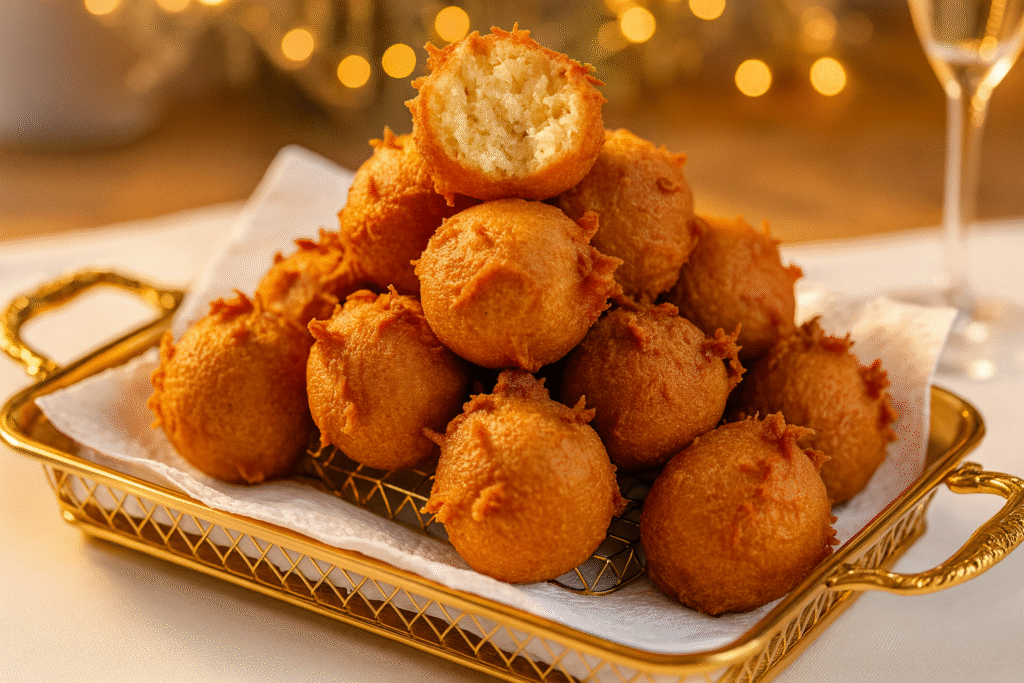
To the world, these are Nigerian Buns—golden, fried dough balls with a crisp shell and a soft, cake-like interior. But in my home growing up, my mother called them “Make You Well.” Whether served to coax an appetite back during sickness, to welcome guests, or to usher in the New Year, these treats are the definition of comfort. Unlike the yeast-based Puff Puff, Buns rely on baking powder for their rise, resulting in a denser, richer mouthfeel closer to a scone or a cake doughnut.
The Strategy for Success
The Goal (The Promise):
This guide ensures you get the “Holy Trinity” of a perfect Bun: a rock-hard (crunchy) exterior, a pillow-soft interior, and a perfectly spherical shape.
The Common Pitfall (The Risk):
The “Deceptive Brown.” We have all bitten into a Bun that looks perfectly golden on the outside, only to find raw, sticky batter in the center. Or, conversely, a Bun that is so hard it could break a window (and your teeth).
The Method (The Teacher):
We will use the “Rub-In & Rest” Technique. By rubbing the butter into the flour (rather than melting it) and allowing the sticky dough to rest before frying, we control gluten development to ensure the inside remains tender while the outside gets that signature crunch.
At a Glance
| Prep | Cook | Total | Servings | Skill Level |
| 10 Min | 20 Min | 30 Min | 12-15 Buns | Beginner |
Why This Recipe Works
- Chemical Leavening: We use baking powder (or self-raising flour) instead of yeast. This provides an immediate reaction with the heat, creating internal steam pockets that fluff up the batter instantly.
- The “Shortening” Effect: Rubbing the butter into the flour coats the protein strands in fat. This prevents them from bonding too strongly with the liquid, ensuring the bun is “short” (crumbly/cakey) inside rather than chewy like bread.
- Evaporated Milk Richness: Using evaporated milk adds concentrated milk solids and fats, which caramelize faster than water, giving the buns a deeper golden color and a milky flavor profile.
The Ingredients (Teacher’s Notes)
- 3 Cups All-Purpose Flour (or Self-Raising)
- 💡 (The Teacher’s ‘Why’): I recommend All-Purpose flour mixed with baking powder (see below) because it gives you more control over the rise than pre-mixed self-raising flour.
- 🚫 (The Risk Manager’s ‘Why Not’): Do not use Bread Flour. It has too much protein and will make your “Make You Well” buns tough and chewy.
- 2 tsp Baking Powder (If using All-Purpose Flour)
- 💡 (The Teacher’s ‘Why’): This is the engine of the recipe. It releases carbon dioxide when heated, puffing up the buns.
- 🚫 (The Risk Manager’s ‘Why Not’): Do not confuse this with Baking Soda. They are not the same. Baking soda requires an acid to work; baking powder is a complete package.
- 1/2 Cup Granulated Sugar
- 💡 (The Teacher’s ‘Why’): Sugar provides sweetness, but technically, it attracts moisture (hygroscopic), keeping the inside soft. It also aids in browning (Maillard reaction).
- 🚫 (The Risk Manager’s ‘Why Not’): Do not use coarse brown sugar; it creates dark spots on the crust before the inside is cooked.
- 1/2 Cup Evaporated Milk (Liquid)
- 💡 (The Teacher’s ‘Why’): This was your mother’s secret. It adds a creamy, rich undertone that water cannot replicate.
- 🚫 (The Risk Manager’s ‘Why Not’): Do not use Sweetened Condensed Milk unless you drastically reduce the sugar, or the buns will burn instantly.
- 50g Butter (Cold or Room Temp)
- 💡 (The Teacher’s ‘Why’): This adds flavor and tenderness.
- 🚫 (The Risk Manager’s ‘Why Not’): Do not melt the butter into liquid. We need it semi-solid to rub into the flour.
- Vegetable Oil (For deep frying)
Instructions (The ‘Why/Why Not’ Core)
Step 1: The Dry “Crumble”
In a large bowl, mix the flour, baking powder, sugar, and a pinch of salt. Add the butter chunks. Using your fingertips, rub the butter into the flour until the mixture looks like coarse breadcrumbs.
- 💡 (The Teacher’s ‘Why’): This is called “shortening” the dough. We are coating flour particles in fat to inhibit gluten formation. This guarantees a cake-like texture.
- 🚫 (The Risk Manager’s ‘Why Not’): Do not knead the butter in like bread dough. Light fingertips only. If you overwork it, the buns will be tough.
Step 2: The Wet Bind
Make a well in the center. Pour in the evaporated milk and about ½ cup of water. Mix gently with a spoon or your hand until a sticky, rough dough forms.
- 💡 (The Teacher’s ‘Why’): We are hydrating the starch. The consistency should be sticky and tacky—much thicker than Puff Puff batter, but softer than bread dough.
- 🚫 (The Risk Manager’s ‘Why Not’): Do not aim for a smooth, dry ball. If the dough is too dry, the buns will be heavy stones. It should stick to your hands slightly.
Step 3: The Heat Check
Heat your oil in a deep pot to medium heat (approx 350°F / 175°C). Test it by dropping a tiny piece of dough in.
- 💡 (The Teacher’s ‘Why’): The dough should sink for a second, then sizzle and pop up to the surface.
- 🚫 (The Risk Manager’s ‘Why Not’): If the dough stays at the bottom, the oil is cold (greasy buns). If it browns instantly upon touching the oil, it is too hot (raw inside).
Step 4: The “Squeeze & Drop”
Dip your hand in water (to prevent sticking). Grab a chunk of dough, squeeze it through the circle made by your thumb and index finger (to make it round), and drop it into the oil.
- 💡 (The Teacher’s ‘Why’): This extrusion technique creates a smooth, spherical surface tension, preventing “horns” or jagged edges on your buns.
- 🚫 (The Risk Manager’s ‘Why Not’): Do not overcrowd the pot. If you drop too many at once, the oil temperature drops rapidly, and the buns will soak up oil instead of frying.
Step 5: The Low-Heat Finish
Once the buns float, reduce the heat slightly to medium-low. Fry, turning constantly, until deep golden brown (about 8-10 minutes).
- 💡 (The Teacher’s ‘Why’): Buns are dense. They need time for heat to penetrate to the center. Lower heat allows this thermal transfer without burning the crust.
- 🚫 (The Risk Manager’s ‘Why Not’): Do not rush this. If you take them out when they are light gold, the center will be raw batter.
The ‘Risk-Free Q&A’ (Troubleshooting)
- Scenario 1: “My Buns are rock hard!”
- Analysis: You likely over-mixed the dough (developing too much gluten) or didn’t add enough liquid.
- Solution: Next time, mix only until the flour disappears. Ensure the dough is sticky/tacky, not dry.
- Scenario 2: “The inside is raw and gooey.”
- Analysis: Your oil was too hot. The outside cooked before the heat reached the middle.
- Solution: Lower the heat immediately. You can try to save the raw ones by popping them in a 350°F oven for 5-10 minutes.
- Scenario 3: “They are soaking up oil.”
- Analysis: The oil was too cold when you dropped them in, or you overcrowded the pan.
- Solution: Remove the buns, increase the heat, wait for the oil to shimmer, and fry in smaller batches.
Notes & Substitutions
- Flavor Boost: My mother’s recipe is classic, but you can add 1 tsp of Nutmeg or Orange Zest to the dry mix for an aromatic twist.
- Egg: Some recipes add an egg. This makes the bun richer but softer (less crunchy). For the classic “hard” bun, skip the egg.
- Self-Raising Flour: If using Self-Raising flour, omit the baking powder and salt.
Make-Ahead & Storage
- Storage: These are best eaten fresh. Store in an airtight container for up to 2 days lined with a paper towel.
- Freezing: Do not freeze the raw dough. Baking powder loses its potency if it sits too long. You can freeze fried buns and reheat them in the oven.
- Reheating: Microwave for 10 seconds to restore softness, or oven at 150°C for 5 minutes to restore crunch.
The “Best” Nigerian Buns (Make You Well) Recipe Card
Ingredients:
- 3 cups All-Purpose Flour
- 2 tsp Baking Powder
- 1/2 cup Sugar
- 50g Butter (cubed)
- 1/2 cup Evaporated Milk
- 1/2 cup Water (adjust for consistency)
- Pinch of Salt
- Oil for frying
Instructions:
- Rub In: Mix flour, baking powder, sugar, and salt. Rub butter into flour until crumbly.
- Mix: Add milk and water. Mix gently to form a sticky, rough dough. Do not over-mix.
- Heat: Heat oil to medium heat. Test with a drop of dough.
- Fry: Scoop balls of dough into the oil. Reduce heat to medium-low.
- Finish: Fry for 8-10 minutes until deep golden brown and cooked through. Drain and serve warm.