
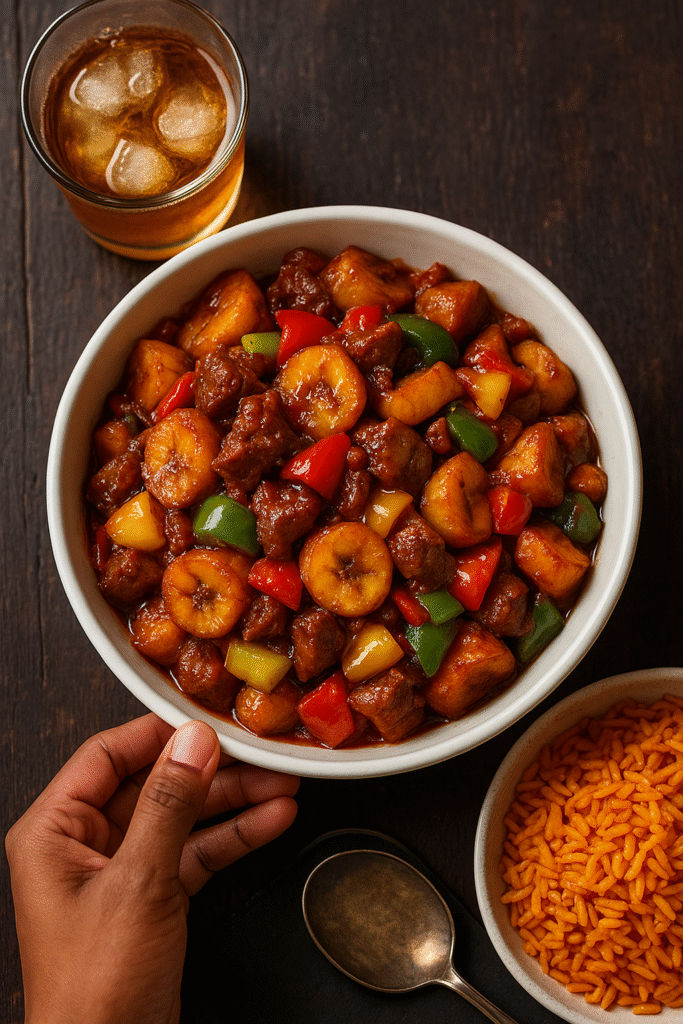
Gizdodo: The “Crisp-Bind” Technique
Intro
Gizdodo is a beloved Nigerian fusion dish that combines the savory chew of gizzards (Giz) with the sweet softness of fried plantains (Dodo). It is tossed in a spicy, vibrant pepper sauce and garnished with colorful bell peppers. Typically served as a “Small Chop” (appetizer) at parties or a side dish to Jollof Rice, the flavor profile is a dynamic interplay of spicy, sweet, savory, and crunchy. I have to exercise strict portion control when it comes to this sweet and chewy dish.
The Strategy for Success
The Goal (The Promise):
This guide ensures you achieve distinct textural integrity: the plantains remain firm and sweet, the gizzards are tender inside but crisp outside, and the vegetables retain their “snap.” We want a dish that is coated in sauce, not swimming in oil.
The Common Pitfall (The Risk):
The “Mushy Grease Trap.” This happens when the tomato sauce is too watery (turning the plantains into a soggy mess) or when the gizzards are not boiled sufficiently before frying, resulting in rubbery meat that fights your teeth.
The Method (The Teacher):
We will use the “Deconstructed Prep, Rapid Assembly” Method. We cook the protein and starch separately to their peak textures and create a highly reduced (dry) sauce. We only combine them in the final 60 seconds to preserve the crispness of the dodo.
At a Glance
| Prep | Cook | Total | Servings | Skill Level |
| 25 Min | 45 Min | 70 Min | 4-6 | Intermediate |
Why This Recipe Works
- Collagen Breakdown: By boiling the gizzards first with aromatics, we break down the tough connective tissue. Flash-frying them afterwards adds a Maillard crust without drying out the center.
- Moisture Control: We fry the tomato base until the oil separates (a sign of water evaporation). A “dry” sauce coats the ingredients like a glaze rather than soaking them like a stew.
- Staged Introduction: Adding the bell peppers last utilizes residual heat to cook them slightly while retaining their vibrant color and crunch (phytonutrient preservation).
The Ingredients (Teacher’s Notes)
- 500g Chicken or Turkey Gizzards (Cleaned thoroughly)
- 💡 (The Teacher’s ‘Why’): Gizzards are a muscular stomach organ. They require a two-step cooking process (simmer + fry) to become palatable.
- 🚫 (The Risk Manager’s ‘Why Not’): Do not skip the cleaning. You must peel away the tough yellow inner lining (the grinder). It is bitter, gritty, and inedible. If using Turkey gizzards, add 15 minutes to the boiling time as they are tougher.
- 4 Large Ripe Plantains (Firm to the touch)
- 💡 (The Teacher’s ‘Why’): You want “Stage 4” ripeness—yellow skin with a few black spots. This ensures high sugar content for caramelization but enough starch structure to hold a cube shape.
- 🚫 (The Risk Manager’s ‘Why Not’): Do not use black, fully soft plantains. They absorb too much oil and will disintegrate into the sauce upon contact.
- 2 Cups Tomato & Pepper Blend (Roughly blended Tomatoes, Scotch Bonnet, Onions)
- 💡 (The Teacher’s ‘Why’): This provides the acidic balance to the sweet plantain.
- 🚫 (The Risk Manager’s ‘Why Not’): Do not use a watery blend. If your blend is watery, boil it down separately before frying to save time and prevent splattering.
- Green, Red, & Yellow Bell Peppers (Diced)
- 💡 (The Teacher’s ‘Why’): These provide the “fresh” element and visual contrast.
- 🚫 (The Risk Manager’s ‘Why Not’): Do not dice these too small. They should be roughly the size of the gizzard cubes for uniform eating.
- Vegetable Oil (For frying)
- 💡 (The Teacher’s ‘Why’): A neutral oil with a high smoke point (like Canola or Sunflower) is essential for deep frying.
Instructions (The ‘Why/Why Not’ Core)
Step 1: The Gizzard Tenderization
Wash gizzards with salt and water. Place in a pot with chopped onions, thyme, curry powder, seasoning cubes, and salt. Add water to just cover the meat. Boil on medium heat for 30-40 minutes until a fork pierces them easily.
- 💡 (The Teacher’s ‘Why’): We use minimal water to steam-boil the meat in its own juices, concentrating the flavor.
- 🚫 (The Risk Manager’s ‘Why Not’): Do not rush this. If the gizzard is rubbery now, it will be rubbery forever. Frying later only makes the outside crisp; it won’t cook the inside further.
Step 2: The “Double-Texture” Fry
Strain the gizzards (reserve the stock!). Cut them into bite-sized chunks. Deep fry in hot oil until golden brown (approx 3-5 mins). Remove and drain. In the same oil, fry the cubed plantains until golden. Remove and drain.
- 💡 (The Teacher’s ‘Why’): Frying the gizzard dehydrates the surface, creating a texture contrast against the soft plantain.
- 🚫 (The Risk Manager’s ‘Why Not’): Do not fry the gizzards until they are rock hard. They just need a crust. Do not fry plantains in cold oil, or they will soak up grease (Soggy Dodo Syndrome).
Step 3: The Binding Sauce
Decant most of the oil, leaving about 1/4 cup. Sauté chopped onions. Add the tomato/pepper blend. Fry on medium heat for 10-15 minutes until the oil floats to the top and the sauce creates “craters” (bubbles pop loudly).
- 💡 (The Teacher’s ‘Why’): We are looking for oil separation. This indicates all the water has evaporated. The lycopene in the tomatoes is now oil-soluble and vibrant red.
- 🚫 (The Risk Manager’s ‘Why Not’): Do not proceed if the sauce is still watery. Wet sauce will steam the fried plantains, ruining the crust you worked so hard to create.
Step 4: The Assembly (Timing is Critical)
Add the fried gizzards to the sauce first. Stir to coat. Add 2 tablespoons of the reserved gizzard stock (Step 1) to loosen the sauce slightly. Add the fried plantains and the diced bell peppers.
- 💡 (The Teacher’s ‘Why’): We add the gizzard first because it is less fragile. We add stock to reintroduce savory depth (umami).
- 🚫 (The Risk Manager’s ‘Why Not’): Do not dump the stock in blindly. You want a glaze, not a soup.
Step 5: The Final Toss
Stir gently to mix everything. Simmer for exactly 1 minute. Turn off the heat immediately.
- 💡 (The Teacher’s ‘Why’): The residual heat is sufficient to warm the peppers without breaking down their cell walls, keeping them crunchy.
- 🚫 (The Risk Manager’s ‘Why Not’): Do not overcook! If you cook for 5 more minutes, the plantains will turn to mush and the peppers will turn brown.
The ‘Risk-Free Q&A’ (Troubleshooting)
- Scenario 1: “My gizzards are hard to chew.”
- Analysis: You likely cut the boiling time short or boiled them at too high a heat (seizing the protein) without sufficient water.
- Solution: It is hard to fix post-frying. Next time, use a pressure cooker for the gizzards (15 mins) to guarantee tenderness.
- Scenario 2: “The dish is extremely oily.”
- Analysis: You didn’t drain the fried items properly, or you used too much oil in the sauce base.
- Solution: Tilt the pot to the side and spoon out excess oil before serving. Ensure plantains and gizzards are drained on paper towels before adding to the sauce.
- Scenario 3: “The plantains turned to mash in the sauce.”
- Analysis: You used over-ripe plantains or you stirred too aggressively.
- Solution: Use a silicone spatula for folding instead of a metal spoon. Use slightly firmer plantains next time.
Notes & Substitutions
- Air Fryer Method: To reduce calories, you can air fry the boiled gizzards and the raw plantains (spray with oil, 190°C for 12-15 mins).
- Protein Swap: This method works perfectly for “Beef-dodo” (using boiled beef chunks) or Snail-dodo (using cleaned snails).
- Spice Level: Adjust the Scotch Bonnet peppers. For a mild version, use only Red Bell Peppers (Tatashe) for the base.
Make-Ahead & Storage
- Prep: You can boil the gizzards and fry the sauce up to 2 days in advance. Store in the fridge.
- Storage: Gizdodo is best eaten fresh. If stored, the plantains will eventually soften.
- Reheating: Reheat in an oven or air fryer to try and revive some texture. Microwaving will result in soft plantains.
The “Best” Gizdodo Recipe Card
Ingredients:
- 500g Gizzards (Chicken/Turkey), cleaned
- 4 Ripe Plantains (cubed)
- 3 Bell Peppers (Green, Red, Yellow – diced)
- 2 cups Pepper Mix (Tomato/Habanero/Onion blend)
- 1 Onion (chopped)
- Seasoning: Curry, Thyme, Bouillon Cubes, Salt
- Vegetable Oil
Instructions:
- Boil: Cook cleaned gizzards with onions, thyme, curry, and bouillon until tender (30-40 mins). Drain and chop.
- Fry: Deep fry gizzard chunks until golden. Deep fry plantain cubes until golden. Set both aside on paper towels.
- Sauce: Heat minimal oil. Sauté onions. Add pepper mix and fry until oil separates (dry sauce). Add a splash of gizzard stock.
- Combine: Toss gizzards in sauce. Fold in plantains and diced bell peppers.
- Finish: Simmer for 60 seconds. Serve hot.