
Intro
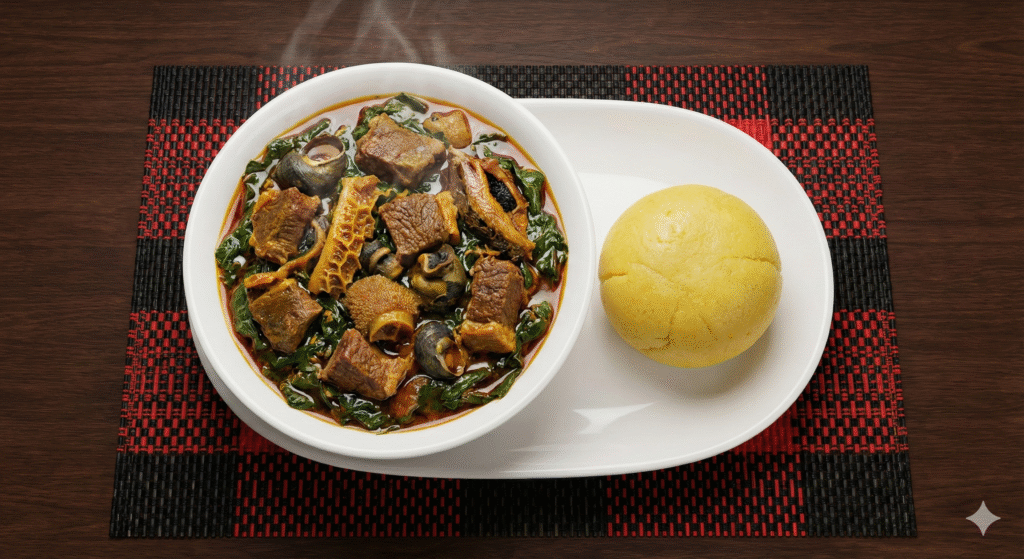
Edikang Ikong is often referred to as the “Soup of the Wealthy” (Efere Mbukpo) because of the sheer quantity of assorted meats and seafood required to make it properly. Originating from the Efik and Ibibio people of Cross River and Akwa Ibom states, it is a nutritional powerhouse. It is a dense, lush vegetable soup that pairs perfectly with Fufu, Pounded Yam, or Eba. The flavor profile is deeply savory, dominated by the iron-rich taste of Ugu leaves, the slight tang of waterleaf, and the heavy umami of crayfish and stockfish. Of all the Edikaikong that I have tasted, the best are cooked in the riverine parts of the South South of Nigeria, I think the ingredients from that locale taste the best.
The Strategy for Success
The Goal (The Promise):
This guide ensures you achieve the signature texture of authentic Edikang Ikong: a pot of vegetables that are intertwined with palm oil and meat, containing zero excess liquid. The soup should not be “pourable” like a broth; it should be a scoopable mound of greens.
The Common Pitfall (The Risk):
The “Vegetable Tea” Disaster. This happens when a cook treats this like a standard stew and adds water, or fails to manage the moisture content of the Waterleaf. The result is a watery, unappetizing soup where the oil floats separately from a green broth.
The Method (The Teacher):
We will use the “Osmotic Extraction” Protocol. We will add absolutely no water to the soup pot during the vegetable phase. Instead, we will rely on heat and salt to force the Waterleaf to release its internal moisture. This natural vegetable juice, combined with palm oil, becomes the only liquid in the pot.
At a Glance
| Prep | Cook | Total | Servings | Skill Level |
| 45 Min | 45 Min | 1 Hr 30 Min | 6-8 | Advanced |
Why This Recipe Works
- Moisture Management: By cooking the proteins until the stock is almost entirely evaporated before adding the vegetables, we prevent the soup from becoming watery.
- Staged Vegetable Integration: We add Waterleaf first because it needs time to wilt and release liquid (hydrolysis). We add Ugu last because it is fibrous and needs to retain its structural integrity (crunch) and green color (chlorophyll).
- Emulsification: The abundant use of Palm Oil isn’t just for flavor; it emulsifies with the small amount of thick stock and vegetable juice to coat every leaf, locking in nutrients and flavor.
The Ingredients (Teacher’s Notes)
- 1 kg Ugu (Fluted Pumpkin Leaves) (Washed, picked, and chopped)
- 💡 (The Teacher’s ‘Why’): Ugu provides the “body” and structure of the soup. It is high in fiber and iron.
- 🚫 (The Risk Manager’s ‘Why Not’): Do not chop the leaves before washing. Wash the leaves whole, then chop. Chopping before washing leaches out water-soluble vitamins and chlorophyll, leading to a bland, pale soup.
- 2 kg Waterleaf (Talinum triangulare) (Picked and chopped)
- 💡 (The Teacher’s ‘Why’): This is the “solvent.” Waterleaf is over 90% water. As it cooks, its cells burst, creating the steaming liquid that cooks the Ugu.
- 🚫 (The Risk Manager’s ‘Why Not’): Do not use Spinach as a 1:1 substitute for Waterleaf without adjusting the method. Spinach releases water but lacks the slight mucilaginous (thickening) quality of Waterleaf. (See Substitutions).
- 2 Cups Red Palm Oil
- 💡 (The Teacher’s ‘Why’): This soup requires a lot of oil. The oil creates a hydrophobic barrier on the tongue that amplifies the savory notes of the crayfish.
- 🚫 (The Risk Manager’s ‘Why Not’): Do not be stingy with the oil. If you use too little, the soup will taste dry and “grassy.”
- Protein Base: Beef, Ponmo (Cow Skin), Shaki (Tripe), Stockfish, Dry Fish
- 💡 (The Teacher’s ‘Why’): The variety of textures (chewy Ponmo, fibrous Stockfish, soft Dry Fish) creates the “mouthfeel” complexity Edikang Ikong is famous for.
- 🚫 (The Risk Manager’s ‘Why Not’): Do not leave the Stockfish tough. It must be boiled until soft enough to be pulled apart by hand.
- 1 Cup Periwinkles (Isam/Mfi) (Shelled or Unshelled)
- 💡 (The Teacher’s ‘Why’): Adds a unique crunch and ocean-mineral flavor.
- 🚫 (The Risk Manager’s ‘Why Not’): The Sand Trap. You must wash these 5-6 times until the water runs clear. One grain of sand ruins the entire pot.
- 1 Cup Ground Crayfish (Generous amount)
- 💡 (The Teacher’s ‘Why’): This is the primary seasoning agent. The glutamates in crayfish replace the need for excessive salt.
Instructions (The ‘Why/Why Not’ Core)
Step 1: The Protein Concentrate
Boil the tough meats (Beef, Shaki, Stockfish) with onions, seasoning cubes, and very little water. Cook until tender.
- 💡 (The Teacher’s ‘Why’): We want a concentrated stock.
- 🚫 (The Risk Manager’s ‘Why Not’): Crucial Warning: By the time the meat is done, there should be almost ZERO liquid left in the pot (maybe 2-3 tablespoons of thick gravy). If you have a cup of stock left, drain it out and save it for another dish. Do not leave it in the pot.
Step 2: The Seafood Bloom
Add the Dry Fish, Periwinkles, 1 cup of Palm Oil, and half the ground crayfish to the meat pot. Stir and cook on medium heat for 5 minutes.
- 💡 (The Teacher’s ‘Why’): We are frying the stockfish and dry fish in the oil to release their aroma before the vegetables dilute the temperature.
- 🚫 (The Risk Manager’s ‘Why Not’): Do not skip the oil here. Adding oil now prevents the meat from burning since we have no water in the pot.
Step 3: The “Solvent” Phase (Waterleaf)
Add the chopped Waterleaf. Do not stir immediately. Cover the pot and let it steam for 3-5 minutes.
- 💡 (The Teacher’s ‘Why’): The heat causes the Waterleaf to wilt and release its juices.
- 🚫 (The Risk Manager’s ‘Why Not’): Do not add water. I repeat: DO NOT ADD WATER. The Waterleaf will look dry at first, but have faith. It will generate liquid.
Step 4: The Emulsion
Once the Waterleaf has collapsed and released liquid, stir the pot. Add the remaining crayfish, pepper (Scotch Bonnet), and the remaining cup of Palm Oil. Cook for 5 minutes.
- 💡 (The Teacher’s ‘Why’): We are building the emulsion. The oil and waterleaf juice should mix to form a thick, orange-green sauce.
Step 5: The Ugu Finish
Add the chopped Ugu leaves. Stir to combine thoroughly. Simmer for exactly 3-5 minutes on low heat. Turn off the burner.
- 💡 (The Teacher’s ‘Why’): Ugu is fibrous but cooks fast. We want it to just wilt and soften. We want to preserve the chlorophyll (green color).
- 🚫 (The Risk Manager’s ‘Why Not’): Do not overcook! If you cook Ugu too long, it turns dark and mushy. The residual heat of the pot will finish the cooking process.
The ‘Risk-Free Q&A’ (Troubleshooting)
- Scenario 1: “Help! My soup is watery!”
- Analysis: You either left too much stock in the meat pot (Step 1) or your Waterleaf was extraordinarily juicy.
- Solution: Scoop out the meats/vegetables with a slotted spoon. Boil the liquid in the pot on High Heat with the lid OFF until it reduces to oil. Return the veggies to the pot and mix.
- Scenario 2: “The soup tastes bland despite the ingredients.”
- Analysis: You likely skimped on the Crayfish or Palm Oil. Edikang Ikong relies on these two for flavor density.
- Solution: Add another tablespoon of ground crayfish and a splash of oil. Stir and let it sit for 5 minutes (off heat) for flavors to meld.
- Scenario 3: “It feels gritty/sandy.”
- Analysis: The Periwinkles or the Ugu leaves weren’t washed properly.
- Solution: Sadly, there is no fix for a sandy soup. Prevention is the only cure. Wash your greens in a sink full of water (not running water) so the sand sinks to the bottom. Lift the greens out, rinse the bowl, and repeat.
Notes & Substitutions
- Diaspora Substitution: If you cannot find Waterleaf, use Spinach (fresh or frozen). If using frozen spinach, squeeze out all the excess water before adding. If you cannot find Ugu, use Kale (remove stems, massage leaves to soften) or Collard Greens (cook longer).
- The “Salt” Trap: Crayfish, Stockfish, and Seasoning cubes are all salty. Taste your soup before adding raw salt. You often don’t need any.
Make-Ahead & Storage
- Storage: Edikang Ikong keeps well in the fridge for 3-5 days.
- Freezing: It freezes beautifully. The lack of excess water prevents ice crystals from ruining the texture.
- Reheating: Reheat on the stove top. You might see the oil separate when cold (this is normal). It will re-emulsify as it heats.
The “Best” Edikang Ikong Recipe Card
Ingredients:
- 1 kg Ugu (Fluted Pumpkin), chopped
- 2 kg Waterleaf, chopped
- 2 cups Palm Oil
- 1 kg Assorted Meats (Beef, Shaki, Ponmo)
- 1 medium Stockfish Head (cooked soft)
- 2 medium Dry Fish (cleaned & deboned)
- 1 cup Periwinkles (Isam) – optional
- 1 cup Ground Crayfish
- 3-4 Scotch Bonnet Peppers (blended)
- 2 Seasoning Cubes
- Salt to taste
Instructions:
- Concentrate Stock: Boil meats and stockfish with onions/seasoning until tender and liquid is almost dry.
- Fry Base: Add Dry Fish, Periwinkles, 1 cup Palm Oil, and half the crayfish. Cook 5 mins.
- Waterleaf: Add chopped Waterleaf. Cover and steam 3 mins until it releases juice. Do not add water.
- Emulsify: Stir. Add remaining crayfish, pepper, and second cup of Palm Oil. Cook 5 mins.
- Finish: Add Ugu leaves. Stir well. Simmer on low heat for 3-5 mins. Serve hot.